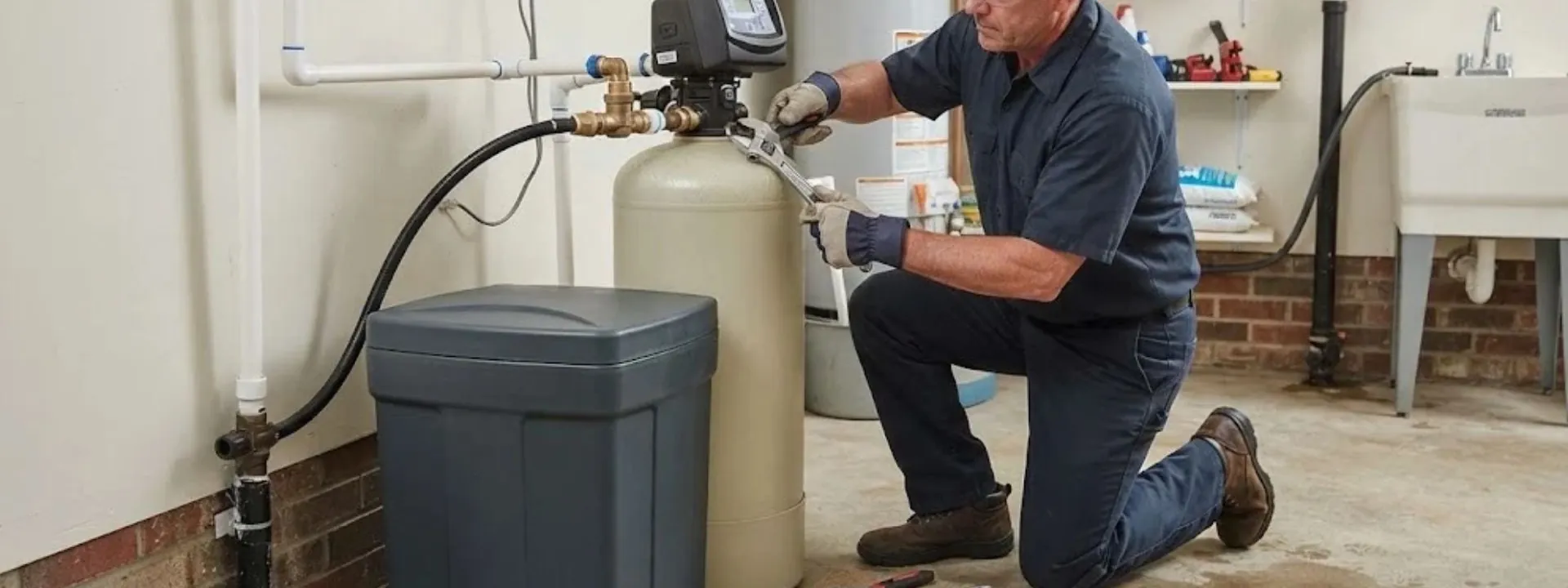
Softening Is Not Filtration
A water softener swaps hardness minerals, mainly calcium and magnesium, for something else as water passes through resin. It reduces scale in pipes and appliances.
A filter removes particles or compounds from water, depending on the media used. The two are often installed together but do different jobs, so decide which problem you actually have before choosing equipment.
We do not diagnose health effects of water, and this page makes no health claims. If you have a medical concern, ask your doctor and your water provider.
What to do before you touch the softener
Most softener problems start with a leak, a stuck valve or a salt issue, and a few cautions protect you and the unit.
- Find the bypass valve and set it to bypass if the unit is leaking or acting up, so the house keeps normal water
- Unplug the control head before you open any cover or move the brine tank
- Lift salt bags with care, keep them dry and store them off a wet floor
- Do not mix different salt types or add other products to the brine tank
- Wipe up any water near the unit and keep it away from outlets
- Note the model label and any error display so the plumber can plan parts
Where Bell Water Falls on the Hardness Scale
The USGS sorts hardness into four classes based on milligrams per liter of calcium carbonate. The Golden State Water Company 2026 Annual Water Quality Report for the Bell-Bell Gardens system, covering calendar 2025, lists 137 to 280 mg/L.
| USGS class | Range in mg/L | Where GSWC Bell-Bell Gardens falls |
|---|---|---|
| Soft | 0 to 60 | Not in range |
| Moderately hard | 61 to 120 | Not in range |
| Hard | 121 to 180 | Low end of the readings starts here, at 137 |
| Very hard | Over 180 | Average of 210 mg/L, about 12 grains per gallon, and a high of 280 |
These figures apply only to addresses served by GSWC. The report says the water is a blend of treated groundwater from the Central Groundwater Basin and imported water from the Colorado River Aqueduct and State Water Project.
Who Supplies Your Water
The first step is to find out who serves your address, because the answer decides which numbers apply. GSWC lists Bell and Bell Gardens in one system, while Tract 180 Mutual Water Company at 4544 Florence Ave in Bell is also a provider in the area.
Your water bill shows the company name. GSWC can be reached at 1-800-999-4033, and addresses on other systems should ask that provider for a hardness figure. In Bell Gardens, the northern third of the city is on its own city system, so those addresses also need a separate answer.
Do not assume the GSWC figures apply to a neighbor's address or to a building in Cudahy or Maywood.
Common Treatment Setups
The plumber matches equipment to your problem, not the other way around.
Salt-based softener
A resin tank and a brine tank work together. Resin takes up hardness minerals, and the brine recharges it on a schedule.
Whole-home sediment filter
A cartridge or backwashing filter catches grit and particles before they reach fixtures and appliances.
Carbon filter
Carbon media is used for taste and odor concerns. It does not soften water.
Point-of-use filter
A small unit at one tap, often under the kitchen sink, treats drinking and cooking water only.
Not sure which system fits?
Call (855) 575-2890 and describe the scale, spots, or taste you notice.
Softener and Conditioner Repair
Existing equipment fails in predictable places. Most service calls involve the control valve, the brine tank, or the resin bed.
The plumber tests the valve and checks the drain line. If a tank has bridged salt or a stuck float, the fix is mechanical. If the resin is spent, the tank needs service.
Control valve and timer
The valve moves water through service, backwash, and recharge cycles. A stuck valve or dead timer can send hard water through the house or run recharge cycles at the wrong time.
Brine tank
Salt can form a hard crust and stop making brine. A tank that is full of salt but out of brine often points to this.
Drain and overflow lines
A clog or kink in the drain line can overflow the brine tank. This is a plumbing problem, which the plumber also handles.
Questions to Answer Before Buying Equipment
A few answers keep you from paying for treatment you do not need.
- Who is your water provider, and what hardness do they report?
- What is the problem, scale, spots, taste, or sediment?
- Is there a drain nearby and room for the tank and the salt?
- Is the home rented? The landlord or property manager must approve.
- Do you have a tank or tankless heater that needs protection?
- What does the manufacturer say about maintenance and refills?
What Treatment Does for Appliances
Scale insulates heating surfaces, so the heater works harder. That is why homes in hard water areas can see noise, longer heat-up times, and shorter service intervals.
A softener ahead of the heater helps protect it. If you own a tankless water heater, scale is a bigger concern because the heat exchanger has narrow passages. For a tank unit, see how sediment affects water heater repair calls.
What Shapes the Price of Treatment
No prices are posted here, because equipment and layout vary. You get a clear price before work starts.
Water treatment is normally not an insurance matter, since homeowner policies cover sudden accidental damage and not scale or routine upkeep. If a softener leak damages a floor, tell your insurer and your landlord. Renters should get written approval before any installation.
Call (855) 575-2890 for a price based on your system.
Call (855) 575-2890Plumbing Work That Goes With It
A softener install often touches the main supply line and a drain connection. If you are also planning other upgrades, the work may overlap with plumbing installation to save a second visit.
Water Softener and Filtration questions
For addresses served by the Golden State Water Company Bell-Bell Gardens system, yes. The 2026 report lists 137 to 280 mg/L, averaging 210 mg/L, which the USGS calls very hard. Other providers, including mutual water companies, should be asked for their own figure.
A softener removes hardness minerals and reduces scale. A filter removes particles or other substances depending on its media. Many homes use both, but they solve different problems.
Yes. The plumber checks the control valve, the brine tank, the drain line, and the resin. You get a clear price before work starts, along with a repair or replace option.
A softener fault is rarely an emergency, but a leaking tank or drain overflow can be. The 24/7 line is open, and same-day appointments are offered when available. Close the supply or bypass valve if you can do so safely.
Ask the landlord or property manager first. About 75 percent of Bell housing is renter-occupied, and treatment equipment is usually tied into the building's plumbing.
Permit rules vary, so ask the Bell building department. Building and Safety at City Hall, 6330 Pine Ave, can say what applies. Softener plumbing ties into the supply line, so the California Plumbing Code, based on the UPC, applies.