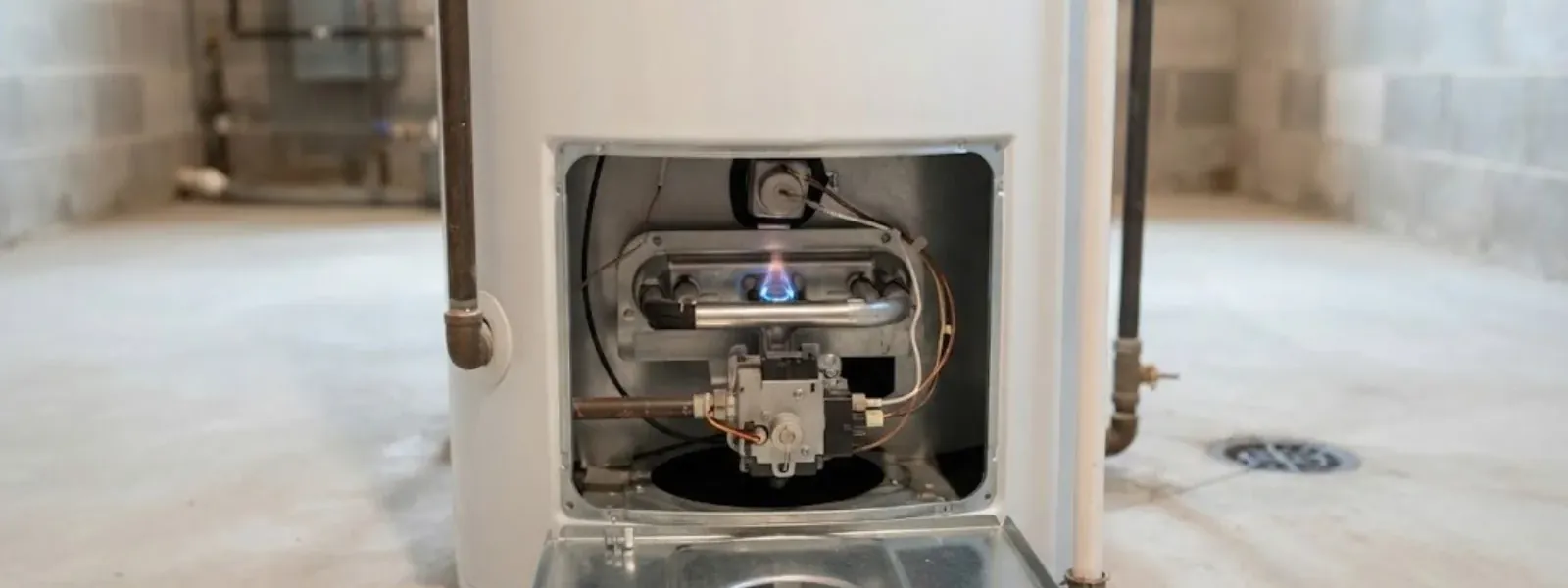
Water on the Floor or No Hot Water at All
A heater that has stopped heating and a heater that is leaking are two different calls. The first is usually a failed part, the second can be a loose fitting or a tank that has given out.
If water is coming from the tank body, treat it as urgent. Close the cold supply, cut the power or gas, and call. If the source is a hidden pipe rather than the heater, leak detection finds it. If the heater is simply cold, you have a little more time, but a gas smell is never a wait-and-see problem.
What to do first when the heater fails
If the heater is leaking, not heating or smells wrong, a few quick actions keep people safe and limit damage.
- If you smell gas, leave the building and call 911 and the gas utility from outside
- Do not relight the pilot if you have smelled gas, and do not flip switches near the heater
- Shut off the cold water supply valve on top of the tank if water is leaking from the unit
- Turn the electric heater off at the breaker, or set a gas control to off, before you dry the area
- Test hot water with your hand first, since a failing thermostat can send scalding water to taps
- Keep children and pets away from standing water and from the heater
Symptoms, Likely Causes, and What You Can Safely Check
This table covers the most common complaints. The check column is limited to things that carry no risk, so stop there and call if anything looks unsafe.
| Symptom | Likely cause | Safe check | Call when |
|---|---|---|---|
| Gas heater is cold and the pilot is out | Thermocouple or flame sensor, or a draft problem | Look for a gas smell first, then read the relight steps on the unit | The pilot will not stay lit, or you smell gas |
| Electric heater gives lukewarm or no hot water | Failed element or tripped thermostat limit | Check the breaker and reset it once | It trips again, or the breaker will not stay on |
| Water too hot | Thermostat setting or a failing control | Read the temperature dial or setting | The water is scalding or the dial has no effect |
| Drip at the top of the tank | Loose fitting or a worn connector | Look for wet pipe joints | You see water at the tank wall or the drip is steady |
| Water from the discharge pipe at the side | Pressure or temperature relief valve opening | Note when it happens | It drips or runs on its own, do not cap the pipe |
| Rumbling or popping noise | Sediment and scale on the tank floor | Listen after a long heating cycle | Noise comes with a drop in hot water |
| Rusty or smelly hot water | Corroded anode rod or tank interior | Run the hot tap and see if cold water is clean | The color or odor persists |
Never cap or plug the relief valve discharge pipe. That valve is the safety release.
Gas, Electric, and Heat Pump Units Fail in Different Ways
The type on your data plate decides where the plumber starts.
Gas
Trouble centers on the pilot, thermocouple, burner, gas control valve, and the vent. A heater that lights and then drops out often points to the flame sensing part.
Electric
The two heating elements and the thermostats do the work. One bad element can leave you with a few minutes of warm water, then nothing.
Heat pump or hybrid
These units add a compressor, fan, and condensate drain. They need open air space and warm surroundings, so airflow and drain checks come first.
Tank leaks
Any type can leak from the shell. Once rust has eaten through steel there is no repair, and the next step is a replacement. A new unit can also be handled as a planned job, see water heater installation.
Where a Leak Starts, and Why It Matters
A fitting leak and a tank leak look alike from across the room. The difference is where the water is first seen once the tank is dry and the pipes are wiped.
The plumber dries the area, then watches the cold inlet, the hot outlet, the relief valve, the drain valve, and the bottom of the tank. A wet fitting can often be tightened or replaced. Water seeping from the tank wall or seam cannot.
If that is the case, the next page to read is water heater replacement, and you will see the replacement and repair choices side by side.
Describe the symptom, get a plan
Call (855) 575-2890 and tell the dispatcher what the heater is doing.
What the Diagnostic Visit Includes
The visit starts with the unit in front of the plumber, not with a guess.
- 1
Read the data plate
Fuel, capacity, and manufacture date tell the plumber what parts apply and whether warranty paperwork is worth finding.
- 2
Check power or gas
A meter or gas test confirms the heat source is working before anything is taken apart.
- 3
Test the parts
Elements, thermostats, flame components, and the relief valve are tested one at a time.
- 4
Inspect the tank
The drain valve is opened to look at sediment, and the anode rod may be pulled for a look where the fitting allows it.
- 5
Explain the options
You get the cause, the repair, and the replace alternative with a clear price before work starts.
Hard Water and Sediment in GSWC Areas
The Golden State Water Company 2026 report for the Bell-Bell Gardens system lists hardness from 137 to 280 mg/L and an average of 210 mg/L. That is about 12 grains per gallon, and very hard on the USGS scale.
Scale builds on elements, and sediment settles at the bottom where it can insulate the burner or the lower element. A flush can help a tank in decent shape. Check your bill to see whether GSWC or another provider serves you, since the figure applies to GSWC addresses only.
A softener or conditioning system is one way to slow the buildup.
What Decides the Repair Bill
There are no prices posted here, because parts and access differ from house to house. You get a clear price before work starts.
Homeowner policies usually cover sudden accidental water damage but not the worn part that failed or a slow leak. Read your policy or call your insurer. If you rent, tell the landlord at once and ask whether your renter's insurance applies.
Call (855) 575-2890 for a plan and a price specific to your heater.
Call (855) 575-2890Water Heater Repair questions
Yes. The 24/7 emergency line takes calls at night and on weekends, and same-day appointments are offered when available. While you wait, close the cold supply valve above the heater, turn off the power or gas, and keep the floor area clear.
If there is no leak and no gas smell, it is urgent but not dangerous, and you can call during the day. If you smell gas, leave the building and call 911 and the gas utility from outside.
It depends on where the water starts. A loose fitting or a worn connector is repairable, but a leak through the tank wall means the shell has failed and the unit needs to be replaced. If it comes to replacement, the work falls under the California Plumbing Code, which is based on the UPC, and permit rules vary, so ask the city building department.
Sediment collects at the base of the tank, and steam bubbles push through it as the water heats. Bell water is very hard for GSWC addresses, so this is common. A flush may help, and a plumber can judge if the tank is worth keeping.
Only if there is no gas smell and the unit's label gives clear steps. If the pilot will not stay lit, or you smell gas, stop. The cause may be a thermocouple, a draft problem, or a gas control that should be handled by a licensed plumber.
About 75 percent of Bell homes are rented, so this is common. Tell your landlord or property manager in writing, include photos, and ask them to approve the repair. Keep the dated message.