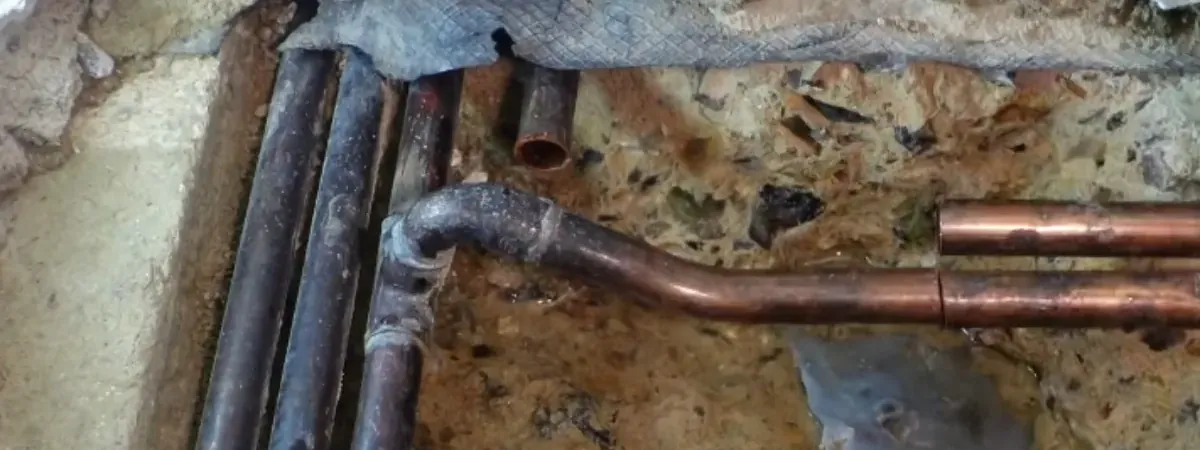
Signs the Water Is Running Under Your Floor
The classic signs are a warm patch on a floor that is otherwise cool, the faint sound of running water when every tap is off, and a water meter that keeps moving. Damp carpet, lifting laminate, a musty smell or a bill that jumped for no clear reason point the same way.
Any one of these can have another cause. Two or three together make a slab leak the likely suspect.
Do Your Own Meter Check First
EPA WaterSense gives a simple test. Read your water meter, use no water for two hours, then read it again. If the numbers changed, water is going somewhere.
Check for running toilets and dripping taps before you call a slab leak. If those are dry, the leak is likely in a pressurized line. Closing the main valve and watching whether the meter stops tells you if the leak is on the house side.
How a Slab Leak Gets Found
The goal is to pin down the leak within a small area before any concrete is touched.
- 1
Isolate the system
Fixtures are shut off and the lines are tested one at a time, which narrows the search to hot or cold and to one side of the house.
- 2
Listen and trace
The plumber uses electronic listening equipment and pressure checks to follow the sound and heat of escaping water through the floor.
- 3
Mark the spot
The likely location is marked so you can see how much floor or finish would need to open.
- 4
Lay out the options
You get the choices, what each one disturbs, and the clear price before any work begins.
Repair Options Compared
No single fix suits every home. This table shows how the main approaches differ.
| Option | How it works | Best fit | Trade-off |
|---|---|---|---|
| Spot repair through the slab | Open the floor above the leak, break the concrete, replace the bad section | One clear leak on an otherwise sound line | Floor finish and concrete must be restored |
| Reroute the line | Abandon the leaking pipe and run new pipe through walls or the attic | Leaks that keep returning on one run | More access holes, less concrete work |
| Repipe the home | Replace the supply lines throughout | Several leaks or worn pipe all over | Larger job and larger price |
A plumber recommends an option only after the leak is located and the line condition is seen.
Meter Moving and Floor Warm? Call Now
The 24/7 line at (855) 575-2890 can book a visit and tell you what to do in the meantime.
Why Slab Leaks Happen
Pipes under a slab sit in contact with concrete and soil for decades. Friction from small ground movement, corrosion on the outside of the pipe and pressure on the line can all wear a hole. Hot lines sometimes fail first because heat expands and flexes the metal.
Mineral build-up is another contributor. For addresses on the Golden State Water Bell-Bell Gardens system, the 2026 report lists hardness from 137 to 280 mg/L with a 210 average. That is very hard on the USGS scale, so scale inside older pipe is a reasonable thing to ask about during the visit.
Older Homes in Bell and Slab Questions
Census data indicates about 67.6% of Bell housing units date from before 1960, with 26% from 1939 or earlier. Housing that old often has original plumbing, which is why it makes sense to look at the condition of the whole line and not just the one spot.
About 75% of Bell homes are renter-occupied. If you rent, tell your landlord or property manager about the leak right away and send photos. Do not hire work on your own that the owner has to approve.
Source type: Census ACS housing age and tenure
What to Document for Insurance or Your Landlord
Good records speed up any claim and any repair approval.
Meter readings
Write down the date, time and reading before and after the no-use period.
Photos and video
Capture warm spots, damp flooring, stained baseboards and any visible cracks.
Bills
Keep recent water bills. A sudden rise supports the timing of the leak.
Messages
Keep copies of every email, text or letter with the landlord or insurer.
What Moves the Price of a Slab Leak Repair
The location of the leak and the floor above it drive most of the price. Here is what to expect the plumber to weigh.
Homeowner policies typically respond to sudden accidental damage but not the worn-out pipe or a slow leak. Policies differ on whether they cover the cost of getting to the pipe, so read yours or ask the insurer. Renters should tell the landlord and check renter's insurance.
Call (855) 575-2890 for the price once the leak is located.
Call (855) 575-2890When a Slab Leak Points to Repiping
A single leak on a good line is a repair. Repeat leaks on the same system are different. In that case, repiping the home is worth pricing against paying for repair after repair.
If you are not yet sure the leak is under the slab, start with professional leak detection. When the failure is in an exposed or wall pipe instead, burst pipe repair is the right page.
Slab Leak Repair questions
Yes. The line at (855) 575-2890 answers 24/7. While you wait, shut off the main water valve, keep power away from damp floors, and take photos and meter readings for your insurer or landlord.
Do the dye test. Add food coloring to the tank, wait ten minutes and look for color in the bowl. If the toilets are fine and the meter still moves with all taps off, a hidden leak is more likely.
Yes. Water can lift flooring, feed mold and soften the base under a floor. It also wastes water and raises the bill. EPA WaterSense notes that about 9% of homes have leaks wasting 50 gallons or more per day.
Not always. Rerouting the line through walls or the attic avoids breaking concrete. The plumber will explain which method fits your layout.
Close the main valve if the leak is active, and notify your landlord or property manager in writing. Include photos and meter readings. The owner typically handles building plumbing.
Permit rules vary, so ask the Bell building department at City Hall, 6330 Pine Ave. Your plumber can explain what work is involved. Rerouting or repiping after a slab leak is plumbing work under the California Plumbing Code, which is based on the UPC.