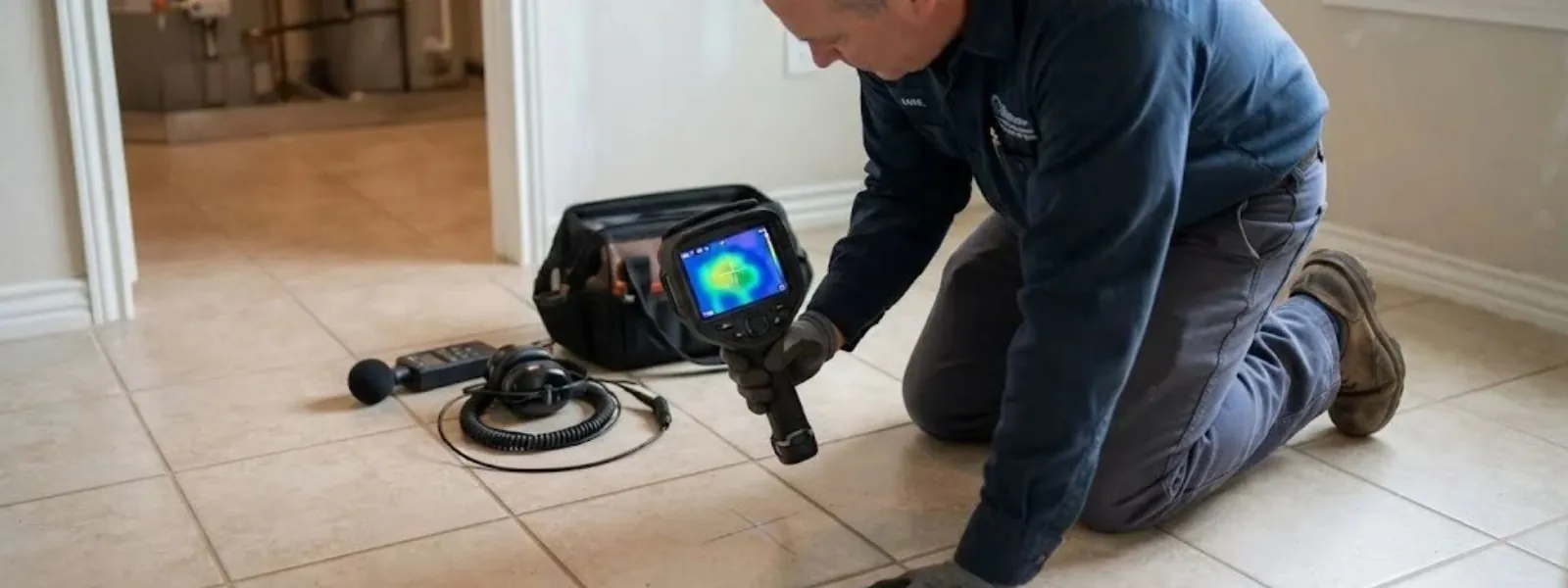
Meter Running, Bill Up, Warm Floor or Damp Wall
These are the four signs that most often send people to the phone. A water meter that keeps turning with everything off, a bill that jumped without a change in habits, a patch of floor that feels warm, and a wall or ceiling that is damp or stained all suggest water is escaping somewhere.
Other signs include a hiss or trickle in a quiet house, peeling paint, bubbling flooring and a musty smell. Not every sign means a pipe leak. A running toilet or a dripping tap can look similar, so rule those out first.
Check Your Water Meter for a Leak
EPA WaterSense describes a simple test you can do in minutes.
- 1
Stop all water use
Turn off taps, dishwashers, washers and ice makers. Make sure nobody flushes.
- 2
Read the meter
Note the numbers or the position of the small leak indicator, if there is one.
- 3
Wait two hours
Use no water at all during that time.
- 4
Read it again
If anything changed, water is escaping. Close the main valve and check whether the meter then stops, which places the leak on the house side.
High Water Bill and What It Can Mean
EPA WaterSense says the average household wastes more than 9,300 gallons a year to leaks, and about 9% of homes have leaks that waste 50 gallons or more per day. A family of four that uses over 12,000 gallons a month in winter may have serious leaks, according to the same source.
Check the bill history before you call. A steady climb across several months points to a slow leak, while a sudden spike can come from a break or a stuck valve. Compare the period to any guests, new appliances or irrigation changes.
Meter Moving With Everything Off?
Call (855) 575-2890 any hour and describe your readings.
Leaks in Ceilings and Walls
A brown stain or soft spot on a ceiling is usually water from above. Sources include a supply or drain line in the floor above, a roof leak or a shower pan. The stain often sits well away from the actual source, since water follows framing before it shows.
The plumber checks the bathrooms and kitchens above, runs the fixtures and uses a moisture reading to trace it. If the source is in the roof or a window, the repair belongs to another trade.
Under the House and in the Crawlspace
In homes with a crawlspace, pipes sit below the floor in view of the plumber. Look for damp soil, dripping fittings and wet insulation, but do not crawl into standing water near electrical wiring.
The plumber can often pinpoint these leaks by tracing and pressure testing before any floor is cut. Homes without a crawlspace face a different problem when water runs beneath concrete, and our slab leak repair page covers that.
Which Leak Is It, and Where Is It Likely
Use this as a starting guide. The plumber confirms the source with tests.
| What you notice | Likely location | First thing to check |
|---|---|---|
| Meter moves, no wet spot | Underground or in a slab | Meter test, then main valve test |
| Warm patch on the floor | Hot line under the slab | Water heater use and floor temperature |
| Ceiling stain | Pipe, shower pan or roof above | Bathroom and kitchen above |
| Soggy yard patch | Service line or irrigation | Meter box and sprinkler zones |
| Hiss in a quiet house | Pressurized supply line | Listen at walls and near fixtures |
| Water bill climbing slowly | Toilet or slow drip | Dye test in the tank |
Buried and Underground Leaks
A leak in a buried line shows up as a wet spot that does not dry, a lush green strip of lawn, a dip in soil or a meter that keeps moving. The water often travels through soil before it shows up, so the wet spot can be some distance from the break.
The plumber uses electronic listening equipment and pressure checks to narrow the area. Digging only starts once the location is pinned down, which keeps the opening small.
The Water Service Line Between Meter and House
This is the pipe that carries water from the utility meter to your building.
What it is
The service line runs from the meter or the property line to the house. A leak here often shows as a moving meter with no wet spot inside.
What GSWC says
The Golden State Water 2026 report for the Bell-Bell Gardens system states its distribution system has no lead or galvanized service lines that require replacement.
What it does not say
That statement covers the utility system. It does not mean every pipe on your property is in good shape, so a leak can still occur.
Who to call
Ask your water company where its responsibility ends and yours begins. A plumber can test the line and tell you whether the leak is before or after that point.
Irrigation, Yard and Meter Box Leaks
Sprinkler zones leak at heads, valves and buried joints. A wet spot that appears only when the sprinklers run points to the system. A wet spot that is there all the time points to a pressurized line.
The meter box itself can hold water from a leaking connection. If the box stays full of water or the meter dial spins with the house off, call before you touch anything. Pool and spa leaks fall outside the scope of this page.
Why Hidden Leaks Matter in Bell
Census figures show about 67.6% of Bell housing units were built before 1960, so many homes carry plumbing that is decades old. That raises the odds of pinholes and failed joints, and it makes locating a leak before opening a wall more valuable.
About 75% of Bell homes are rented. Tenants should report water stains or a high bill to the landlord or manager in writing, with dates and photos. Do not wait for a stain to spread.
Source type: Census ACS housing age and tenure
What Affects the Price of Leak Detection
Finding a leak is different from fixing it. The detection price depends on the following.
Homeowner policies typically respond to sudden accidental water damage but not the worn-out pipe or a slow leak. Some policies handle the cost of finding the leak differently, so read yours or ask the insurer. Renters should tell the landlord and check renter's insurance.
Call (855) 575-2890 for the price of locating your leak.
Call (855) 575-2890When a Located Leak Needs Bigger Work
Once the source is known, you can decide. A single failure may need only a pipe repair. A pattern of leaks on aging lines may point to repiping, and the plumber can explain the difference.
Leak Detection questions
Yes. The line at (855) 575-2890 answers 24/7. While you wait, close the main valve if water is flowing, keep power off near wet areas and take photos and meter readings.
Do the meter test. Read the meter, use no water for two hours and read it again. A change suggests a leak. A damp wall, warm floor or unexplained bill rise points the same way.
Yes. Put food coloring in the tank and wait ten minutes. If color shows in the bowl, the flapper or fill valve is leaking. A worn flapper can waste thousands of gallons a year.
Only after testing narrows the location. The plumber aims to open the smallest area possible and explains the price before work starts.
Report it to your landlord or manager in writing with photos. If water is actively flowing, close the main valve and call the 24/7 line. Keep records of every message.
No. This service covers plumbing in homes and buildings, plus irrigation and yard lines. Pool and spa work is outside what this page covers.