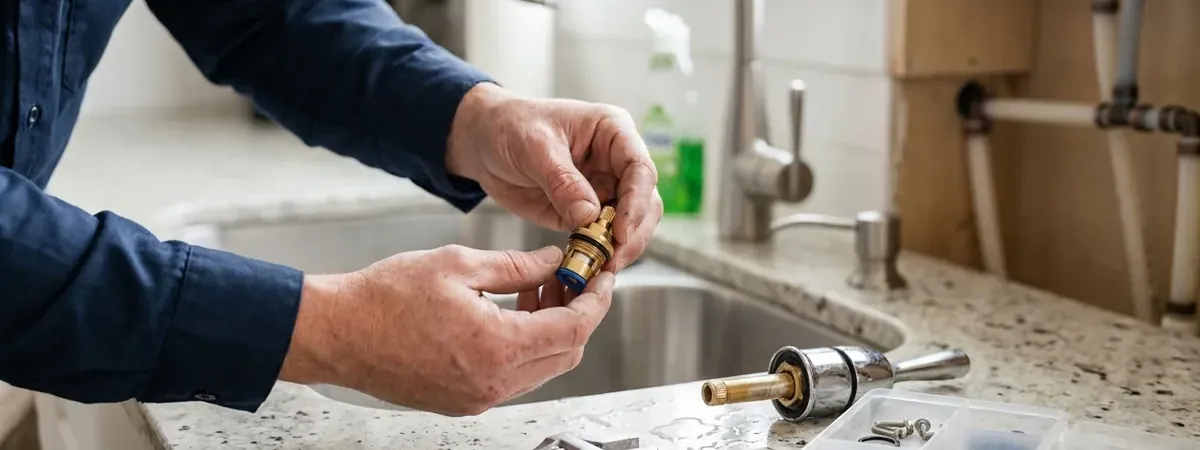
Supply line burst or valve stuck open
Faucets themselves rarely cause floods. The flexible supply hoses under the sink and the small stop valves that feed them do. A braided hose can split at the fitting, and an old stop valve can seize halfway so it neither opens nor closes.
If water is spraying, shut the main for the whole home first, then sort out the fixture. The main shutoff is usually where the water line enters the property, often near the meter or the front wall. Learn where yours is before you need it.
Once the flow is stopped, open a faucet at the lowest point in the home to drain the pipes. Move cabinet contents and photograph the damage before drying anything out.
Before the plumber gets there
A few minutes of work now keeps a small failure from becoming a large one.
- Close the stop valve under the sink, or the main shutoff if it will not turn
- Turn the handle of the damaged faucet to open so pressure bleeds off
- Empty the cabinet under the sink and dry the floor of it
- Switch off power to nearby outlets if water has reached them and you can do so safely
- Photograph the fixture, the damaged area and the wet surfaces
- Do not force a stuck valve with a pipe wrench, because the stem can snap
Common faucet problems and what causes them
Different faucet designs fail in different ways. This table matches the symptom to the usual cause.
| Faucet type | Symptom | Usual cause | Typical repair |
|---|---|---|---|
| Single handle kitchen | Drip from the spout or loose handle | Worn cartridge or O-rings | New cartridge or seals |
| Two handle bathroom | One side drips or squeals | Worn washer or stem seat | Replace the stem or seat |
| Tub and shower | Water runs after turning off or temperature swings | Tired cartridge or mixing valve | New cartridge, sometimes a new valve body |
| Showerhead or spout | Weak or sideways spray | Mineral scale in ports | Clean or replace the part |
| Laundry sink or washer box | Valve leaks or will not turn | Corroded packing or stem | New valve or box |
| Outdoor spigot | Drips from the handle or wall | Worn packing or failed seat | Rebuild or replace the spigot |
How hard water wears out faucets
Minerals that settle out of water leave scale inside cartridges and on aerators. The Golden State Water report for the Bell-Bell Gardens system lists hardness from 137 to 280 mg/L, with an average of 210. On the USGS scale, anything over 180 is very hard.
That is why a faucet at an address on that system may feel stiff, sputter or drip sooner than one in a soft water area. Your water bill shows whether Golden State Water or another provider serves you.
Clearing a clogged aerator is a safe DIY job. Unscrew it by hand, soak it in vinegar and rinse. If the handle itself is gritty or still leaks, the cartridge is likely scarred and needs replacing.
Faucet leaking and you cannot find the cause?
Call (855) 575-2890 and describe the drip. We answer around the clock.
Shower and tub valves behind the wall
A shower that drips from the spout or changes temperature on its own usually has a worn cartridge behind the handle. Many cartridges can be swapped without opening the wall. The plumber removes the handle and trim, pulls the cartridge and fits a matching one.
If the valve body is cracked or corroded, access is needed from behind the wall or through a tile cut. That is a larger job, and the plumber explains it before starting. A wet wall or ceiling below may also need leak detection to confirm where the water travels.
Repair or replace the faucet
A fixture with a failed part can often be saved. These cases usually point to replacement.
| Condition | Repair usually fits | Replace usually fits |
|---|---|---|
| Drip from the spout | Cartridge or washer is the only worn part | Body is pitted and parts are no longer sold |
| Finish flaking or corroded | Not a repair issue | Replace for appearance and sealing |
| Handle spins freely | New set screw or adapter | Internals worn throughout |
| Leak under the sink | Supply hose or stop valve swap | Faucet shank is cracked |
| Low flow at one tap | Descale the aerator and screens | Corrosion inside the pipe feeding it |
What affects faucet repair pricing
A cartridge swap and a full fixture change with new shutoffs are very different visits. We quote the work before it starts.
Homeowner insurance typically responds to sudden accidental water damage, such as a burst supply line, but not to the worn faucet or a slow drip. Read your policy or ask your insurer. If you rent, tell the landlord and check your renter's policy.
Call (855) 575-2890 to hear the price for your faucet or valve.
Call (855) 575-2890Tenants, landlords and property managers
About 75 percent of Bell homes are rented, so many faucet calls come from tenants. Report a failed valve in writing right away and attach photos. Ask the owner who will authorize the repair so the visit is not delayed.
A faucet repair that exposes older shutoff valves may lead to a conversation about wider plumbing work. Our guide to repiping explains when old supply lines make sense to replace, and our work in Maywood and Bell Gardens follows the same approach.
Faucet Repair questions
Yes. The line answers 24/7. Close the shutoff under the sink or the main shutoff for the home, then call.
A plumber can be scheduled the same day when available. Take photos of the damage while you wait.
It is usually near the water meter or where the line enters the property, often in a box at the front. Some homes also have a shutoff inside near the water heater. Find it before an emergency.
A worn washer, cartridge or O-ring is letting water past. The seat can also be scarred by mineral scale. Replacing the worn part usually stops it. According to EPA WaterSense Fix a Leak, the average household loses more than 9,300 gallons a year to leaks, so a steady drip is worth fixing.
Many people do, but corroded stop valves and tight cabinets cause trouble. If the shutoff under the sink will not close fully, stop and call, because forcing it can cause a leak.
It can be. Water inside a wall may damage framing and ceilings below. Shut off the water to the shower if you can, and call for an inspection.
For addresses served by Golden State Water, hardness averages 12 grains per gallon, which is very hard. Scale can clog aerators and wear cartridges. Ask your water company if you are served by another supplier.