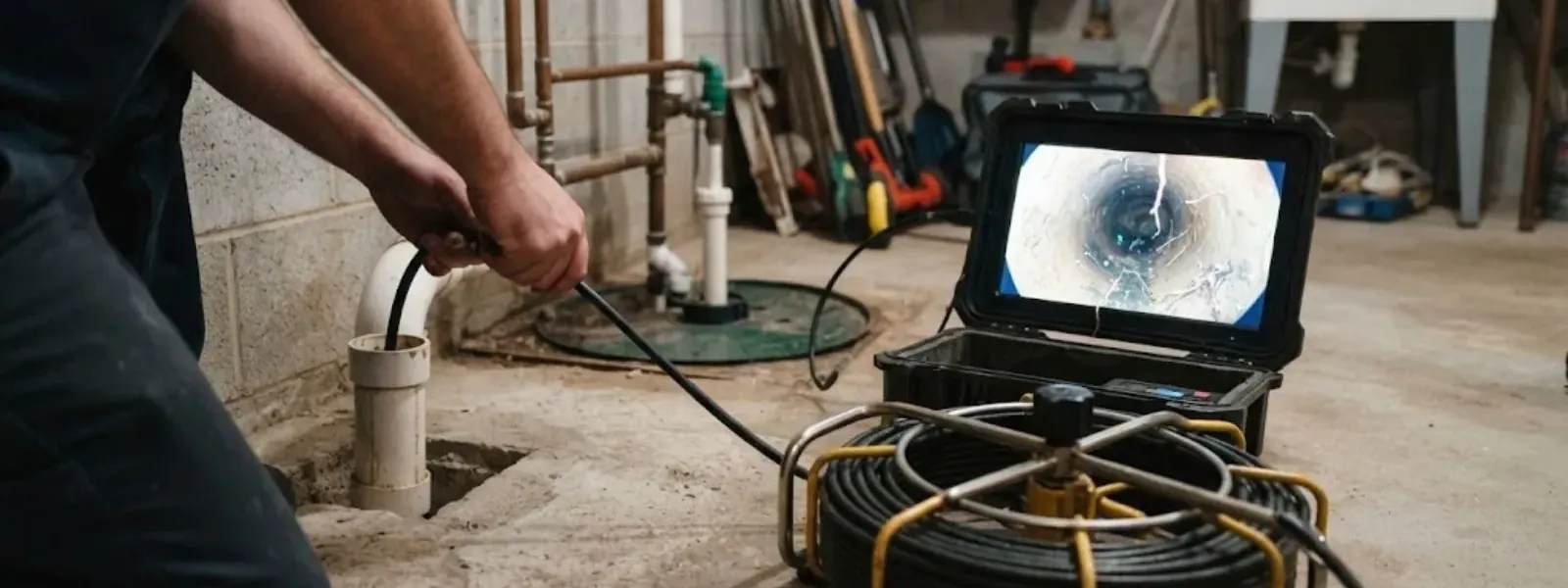
What the camera actually shows
A sewer camera is a waterproof lens on a flexible cable. It enters through a cleanout or a removed fixture, and the plumber pushes it along the line while watching a monitor. Lights on the camera head show the pipe wall, joints and anything sitting in the flow.
Common findings include roots entering at joints, cracks, offset sections where one pipe has shifted from the next, low spots that hold water and scale or grease along the walls. The plumber can also tell if a pipe is cast iron, clay or plastic by its look and joints.
Finding where the line runs
A locator can trace the camera head from the surface. That lets the plumber mark the position and rough depth of a problem, so any later work is planned around the right spot instead of guessing.
Four good reasons to scope a line
Not every home needs one, but these situations make it worth considering.
Before you buy
A camera look gives you a view of the lateral that a walkthrough cannot, which helps in a negotiation or a decision to walk away.
Clogs that keep returning
A line that clears and then fails again is often damaged or heavily rooted. The camera shows which.
Before jetting or lining
Pressure or liner work on a broken pipe makes things worse. Seeing first prevents that.
After a repair
A follow-up scope confirms the repair holds and no other defects remain.
What a camera can and cannot tell you
A scope is useful, and it has limits you should know about.
| Question | Camera can show | Camera cannot show |
|---|---|---|
| Is the pipe cracked or offset? | Visible cracks, gaps and misaligned joints | Hairline cracks hidden by buildup |
| Are roots present? | Roots at joints and inside the pipe | How far outside the pipe they spread |
| Is the pipe sagging? | Standing water in low spots when the line is running | Exact slope values without extra measurement |
| Where is the problem? | Approximate position with a locator | Property lines or who owns the pipe |
| How long will the pipe last? | Current condition | A reliable remaining lifespan |
A camera reports condition today. It does not predict the future.
Planning to buy or tired of repeat clogs?
Call (855) 575-2890 to ask a licensed plumber about a camera look.
Using an inspection when you buy an older home
Sewer laterals are rarely examined during a standard home inspection. A camera look during the buying period gives you pipe condition before the deal closes. If the footage shows a break, you can ask about a repair credit, plan the work or reconsider the purchase.
Ask for the recording and a short written note on what was found. Keep both with your purchase paperwork. If a defect appears, a sewer line repair estimate can be built from that footage.
Why Bell's housing stock makes a scope worthwhile
Census ACS data shows about 67.6% of Bell's housing units were built before 1960. That does not say what pipe is under any single property, and facts about one lot need a camera. It does mean a purchase of an older house is a case where looking is reasonable.
Roughly 75% of Bell's households rent, so many scopes are ordered by landlords. A recording gives a landlord and tenant the same facts to work from when they discuss a repair.
Source type: Census ACS housing data
How the inspection goes
The visit is straightforward, and you can watch the monitor.
- 1
Locate the access point
The plumber finds a cleanout, or removes a fixture if none is available.
- 2
Clear loose debris if needed
A line full of waste or grease can hide the pipe wall, so a quick clearing may come first.
- 3
Run the camera
The camera moves from the access point toward the city connection while the plumber watches and records.
- 4
Mark any problem spots
A locator marks the surface above anything the camera finds.
- 5
Explain the findings
You hear what was seen and which items need action, which can wait and which are normal.
What changes the price of a sewer camera inspection
A clear price is given before work starts. The factors below explain why quotes differ from one property to the next.
Insurance generally does not pay for an inspection that is done only to look, though a claim for sudden damage may involve one. Check your policy or ask the insurer. Tenants should send the landlord any recording, and renter's insurance does not usually cover pipe conditions.
Call (855) 575-2890 to talk about scoping your line and hear a clear price first.
Call (855) 575-2890What to do with the results
A clean pipe means you can stop worrying and keep it that way by watching what goes down the drain. Buildup points to hydro jetting or routine cleaning. A crack, offset or collapse calls for repair, and the footage helps the plumber suggest the right method.
Whatever the result, keep the recording. It becomes a baseline you can compare to next time.
Sewer Camera Inspection questions
It depends on the length of the line, access and how much debris is inside. A short, clear line goes quicker than a long run that needs cleaning first. The plumber will explain what to expect when you call.
Sometimes. A dry trap, a vent problem or a leaking joint can each cause odor, and the camera helps rule out the pipe. Run water to refill rarely used traps, since that is the simplest fix.
No, but it makes the work easier. Without one the plumber can usually go in through a fixture or vent, though that takes more time.
Ask the plumber before the visit. A recording and a short note are useful for buyers, landlords and insurers, so request one if you plan to use the results.
Rules can change, so ask the Bell building department and your real estate professional. Do not assume a requirement exists or does not.
No. The camera shows the pipe, not property lines. Ask Bell Public Works where your responsibility ends.
Yes. The 24/7 line at (855) 575-2890 handles backups, and a camera look can follow once the line is flowing.