The snake cleared it, and then it clogged again
This is the most common reason people call about jetting. A cable bores a hole through a blockage and the water drains, so the job looks finished. The sludge on the pipe wall stays behind, and a few weeks later the hole closes up.
Three causes sit behind most repeat clogs. Grease hardens into a thick lining. Tree and shrub roots enter at joints and grow into a mat. Mineral scale and silt narrow the pipe from the sides.
If any of these sound familiar, the pipe needs to be washed, not just poked. That is what jetting does.
Signs the line needs more than a snake
Slow drains in more than one room, a gurgle from a tub when the sink empties, and a sewer smell near a floor drain all point to buildup along the line. Water standing in a floor drain after laundry is another sign. If sewage is coming up, treat it as an emergency and call right away.
Before help arrives, stay clear and stop the flow
If a line is backing up, a few safe steps keep you away from sewage and high-pressure equipment.
- Stay clear of the cleanout cap, because a blocked line can be under pressure
- Do not rent or run pressure equipment yourself, since a jet hose can injure and damage pipe
- Stop running water, flushing and laundry until the line is cleared
- Skip chemical drain openers, because they can splash back and are unsafe around a jet
- Keep children and pets away from wet floors and floor drains
- Move rugs and boxes off the floor and take dated photos for a landlord or insurer
What hydro jetting does inside the pipe
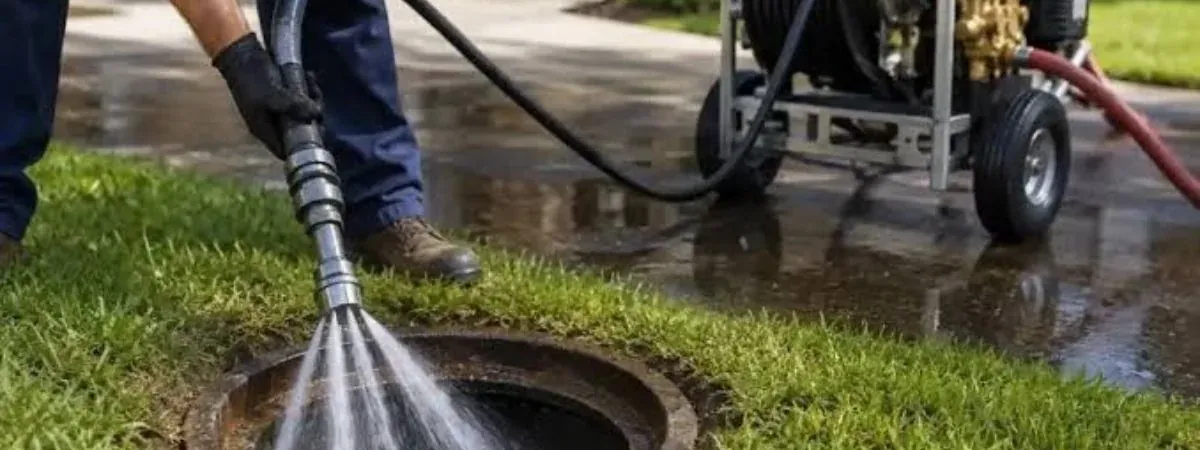
A hydro jet pushes a hose through the line and fires pressurized water from a nozzle. The nozzle has jets facing backward, which pull the hose forward, and jets that spray the pipe wall. The water cuts through grease, loosens scale and carries debris out toward the cleanout or main.
Compared with a cable, the water reaches the whole circumference of the pipe instead of one channel down the middle. Roots are cut back as well, though they can grow again if the joint stays open. A camera look afterward shows how clean the pipe is.
Jetting, snaking and camera work compared
The three methods overlap, but each answers a different question.
| Cable (snake) | Hydro jet | Drain camera | |
|---|---|---|---|
| Best for | Single-fixture clogs, soft blockages | Grease lining, scale, silt, root growth | Finding the cause and the pipe condition |
| Cleans the pipe wall | Partly | Yes, along the length reached | No, it only shows |
| Good for fragile pipe | Often, with care | Not before a camera check | Yes |
| Typical use | First try on a stopped drain | Repeat clogs and heavy buildup | Before jetting, after repeat failures |
A plumber may use more than one method on the same visit.
When jetting is the wrong choice
High-pressure water is not for every pipe. A cracked, offset or collapsed section can be damaged further by the force, and an old clay or cast iron line may have weak spots you cannot see from the surface. In those cases the plumber runs a sewer camera inspection first and may recommend repair instead.
If a camera shows a break, jetting only moves the problem. A repair is the honest answer, and the sewer line repair page covers those options.
Backing up and the snake did not hold?
Describe it to a licensed plumber at (855) 575-2890. The line answers 24/7.
If sewer odor or backup shows up tonight
Use these steps while you wait for the plumber. They keep the problem smaller.
- Stop running water, including laundry, dishwasher and long showers
- Keep children and pets away from any standing water or wet floor
- Do not flush the toilets again if water is rising in the tub or floor drain
- Open a window if there is a strong sewer smell, and do not light matches or candles near gas appliances
- If you smell natural gas, leave the building and call 911 and the gas utility from outside
- Take photos of any water damage for your landlord or insurer
What the visit includes
The sequence matters, because jetting without a look first can cause damage.
- 1
Talk through the history
You describe how often the line has clogged and what has been tried.
- 2
Camera look when it applies
The plumber checks pipe condition and the cause of the blockage.
- 3
Choose a nozzle and pressure
Pipe size, material and the type of buildup guide the setup.
- 4
Jet the line
Water pressure washes the pipe in passes, working from the cleanout toward the main.
- 5
Confirm and report
Flow is tested, and you hear what was found and whether more work is needed.
Why older Bell lines are a jetting candidate
According to Census ACS data, about 67.6% of Bell's housing units were built before 1960, with roughly 26% from 1939 or earlier. Drain lines in homes of that age have had many decades of grease, roots and scale. That makes repeat clogs plausible and also makes a camera look before jetting sensible.
If you rent, which is true for about 75% of Bell households in the same survey, send a note to your landlord about repeat clogs. A written record of the dates helps both of you decide on a lasting fix.
Source type: Census ACS housing data
What drives the cost of hydro jetting
Jetting costs more than a basic snaking because it uses specialized equipment and time. You get a clear price before work starts.
Homeowner insurance generally covers sudden accidental damage, and not a slow buildup of grease or roots, so jetting is usually treated as maintenance. Read the policy or ask the insurer if sewage has already damaged the home. Renters should tell the landlord and check their renter's insurance.
Call (855) 575-2890 for a clear price on your line before the work starts.
Call (855) 575-2890Hydro jetting and the rest of your drain care
Jetting fits best after a smaller method has failed or when you know buildup is the cause. For a single stopped sink, drain cleaning with a cable is usually enough. For a backup across the house, sewer line cleaning covers the larger main-line equipment.
Keeping grease out of the kitchen drain and wipes out of the toilet makes any cleaning last longer. Roots are the exception, since they return unless the pipe is repaired or treated.
Hydro Jetting questions
Yes. The line at (855) 575-2890 runs 24/7. If sewage is backing up, stop water use, keep people out of the affected area and call. Same-day appointments are offered when available, and the plumber decides on site whether jetting or a camera look comes first.
It is safe on sound pipe when pressure and nozzle are matched to the line. Cracked, collapsed or very old pipe can be damaged. That is why a camera look often comes first.
A snake opens a channel through the clog, while a jet washes the pipe wall along its length. Jetting suits grease and scale. Snaking suits a soft blockage at a single fixture.
It cuts roots back and clears the debris, but roots can regrow if they still have an entry point at a joint. A camera shows the entry point, and a repair may be the lasting answer.
A dry trap can let odor up, and a partly blocked line can too. Run water in the drain to refill the trap. If the smell stays or the drain is slow, call so the line can be checked.
Tell your landlord or property manager about the backup and keep a written note of the date. You can also call the line yourself if you need help right away, but ask the landlord about who authorizes repairs.