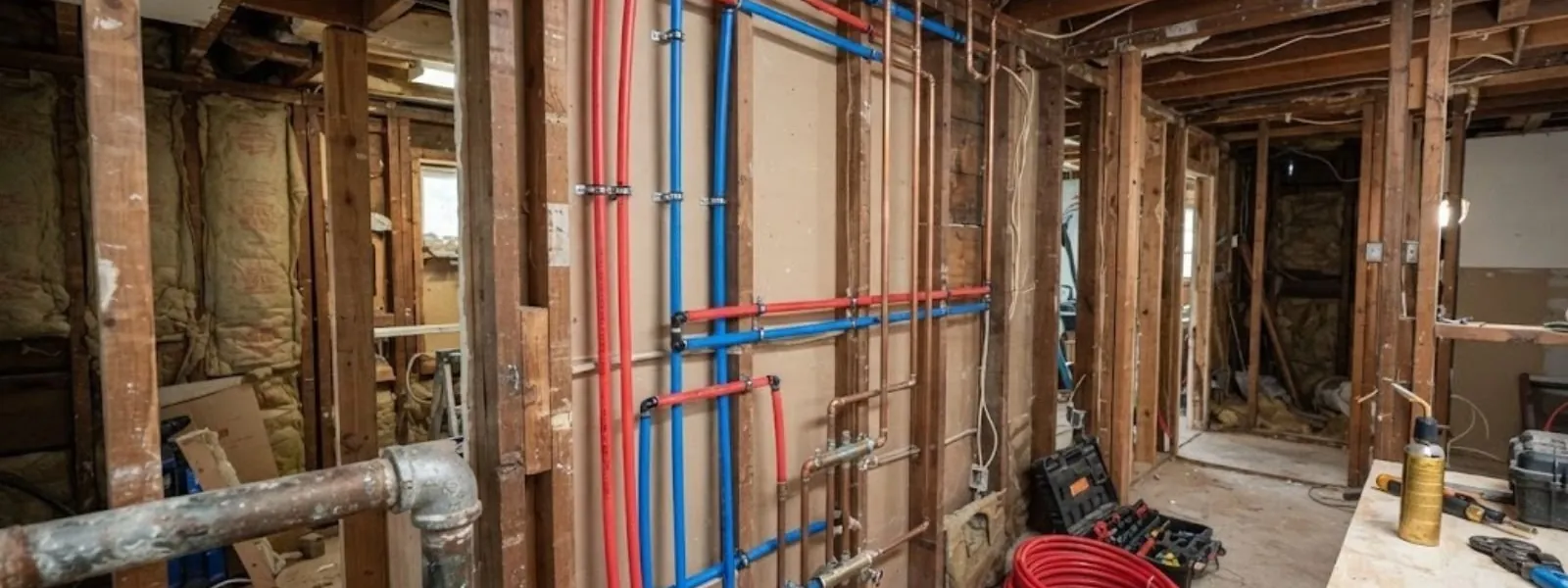
Copper, PEX or CPVC for a Repipe
Each material has strengths and limits. The plumber helps match one to your building and budget.
| Material | Strengths | Limits |
|---|---|---|
| Copper | Long track record, rigid, handles heat well | Can pit and wear from the inside with certain water, and costs more to install |
| PEX | Flexible, fewer joints, quicker to run through walls | Needs protection from sunlight and sharp edges |
| CPVC | Rigid plastic, simple connections, resists corrosion | Can turn brittle with age, so it needs care near heat and tight spots |
Local code and the building's layout also shape the choice, so ask the Bell building department about permit rules.
Before you start a repipe, get the house ready
A repipe opens walls and shuts off water for a stretch, so a little preparation helps everyone in the building.
- Find the main water shutoff and make sure it turns fully before the day of work
- Plan where you will get drinking and washing water while the supply is off
- Clear closets, cabinets and wall space so the plumber can reach the old pipe
- In a duplex or apartment building, tell neighbors and the manager, because shared walls and shared shutoffs may be affected
- Move electronics and valuables away from walls that will be opened
- Take dated photos of existing damage and ask about the permit step with the city building department
Signs Your Home May Need New Supply Pipes
One leak is not a reason to repipe. A pattern is. Look for water that comes out brown or orange after sitting, pressure that has dropped at every tap, stains that keep appearing on ceilings or walls, and pinhole leaks that return on different runs.
Galvanized steel pipe is a common suspect in older homes. Rust builds up inside, narrows the passage and weakens the wall from within. Copper can also wear thin, particularly where water is hard.
Service Line vs Interior Plumbing
Repiping usually means the supply pipes inside the building. The service line is the pipe from the meter to the house, and it is a separate question. The Golden State Water 2026 report for the Bell-Bell Gardens system says its distribution system has no lead or galvanized service lines that require replacement.
That statement covers the utility side only. It does not describe the galvanized or old copper pipe that may be inside a home, which is what a repipe addresses. If your water comes from a different provider, check your bill for who serves you.
Why Bell's Older Housing Makes This Question Common
Census figures show about 67.6% of Bell housing units were built before 1960, and 26% in 1939 or earlier. A house from those years may still have its original supply pipe, so it is reasonable to ask a plumber what is behind the walls when a project opens them up.
Hardness matters too. For GSWC-served addresses the average is 210 mg/L, or about 12 grains per gallon, which the USGS calls very hard. Scale can build inside pipe over time and is worth raising during a repipe consult.
Source type: Census ACS and GSWC annual water quality report
Not Sure Whether to Repipe or Repair?
Call (855) 575-2890 and describe what the water and the walls have been doing.
What a Repipe Project Involves
The sequence below is typical. The plumber adjusts it to your building.
- 1
Walkthrough and pipe check
The plumber traces the lines, checks pressure and looks at the pipe where it is visible.
- 2
Plan and price
You receive a clear price before work starts, including what walls or ceilings must open.
- 3
Permit step
Permit rules vary, so the plan includes asking the Bell building department what applies.
- 4
Install and connect
New pipe runs to every fixture, then reconnects to the main and the water heater.
- 5
Pressure test and restore water
Joints are tested before water goes back on and walls are closed.
Whole House, Phased or Partial
A repipe does not have to happen in one go.
Whole house
Everything replaced in one project. Fewer return visits, but water is off for longer and more walls open.
Phased
One section at a time, such as the bathrooms first. Spreads out the work and the cost.
Single branch
Replace just the failing run, often when the rest of the pipe tests sound.
Drain and supply together
Where old drain lines are also failing, the plumber may suggest coordinating both.
Repiping a Rental or Multi-Unit Building
About 75% of Bell homes are rented, and nearly 29% of units sit in buildings with two or more units. In those buildings the owner decides on a repipe, and tenants often feel the effects first, through low pressure, brown water or ceiling stains.
Tenants should send a written report to the landlord or manager with dates and photos. Property managers can ask for a phased scope that limits how long each unit is without water.
What Shapes the Price of a Repipe
Repiping cost depends on the building more than on the pipe. These are the pieces the plumber weighs.
Insurance generally does not pay to replace pipes that simply wore out. It may respond to sudden accidental damage after a failure. Read your policy or ask the insurer. Renters should tell the landlord and check renter's insurance.
Call (855) 575-2890 to talk through the scope and the clear price.
Call (855) 575-2890Related Plumbing Work to Coordinate
If a leak has already damaged a wall, a burst pipe repair can stop the water while you plan the larger job. A water heater swap is easier when the lines are open, so ask about water heater replacement during the same project.
Fixtures and valves can be upgraded at the same time. Our plumbing installation page covers those additions.
Repiping questions
A magnet does not stick to copper or plastic but sticks to steel. Galvanized pipe is gray and often shows rust stains at the joints. A plumber can confirm what you have.
No. The statement covers the utility distribution system. It does not describe the pipe inside your home, which is what a repipe replaces.
Yes. A phased plan replaces one section at a time and can follow a remodel or the worst leaks first. The plumber will lay out how the sections connect.
It depends on the size of the project and the plan. Phased projects can limit outages. The plumber explains the schedule before starting.
Permit rules vary, so ask the Bell building department. City Hall is at 6330 Pine Ave and the Building and Safety Division handles plumbing permits. Whole-house piping work falls under the California Plumbing Code, adopted statewide and based on the UPC, so the permit question still goes to the city.
Often yes with planning. Phasing by unit and giving tenants notice of water shutoffs keeps disruption lower. Call (855) 575-2890 to talk through the building.