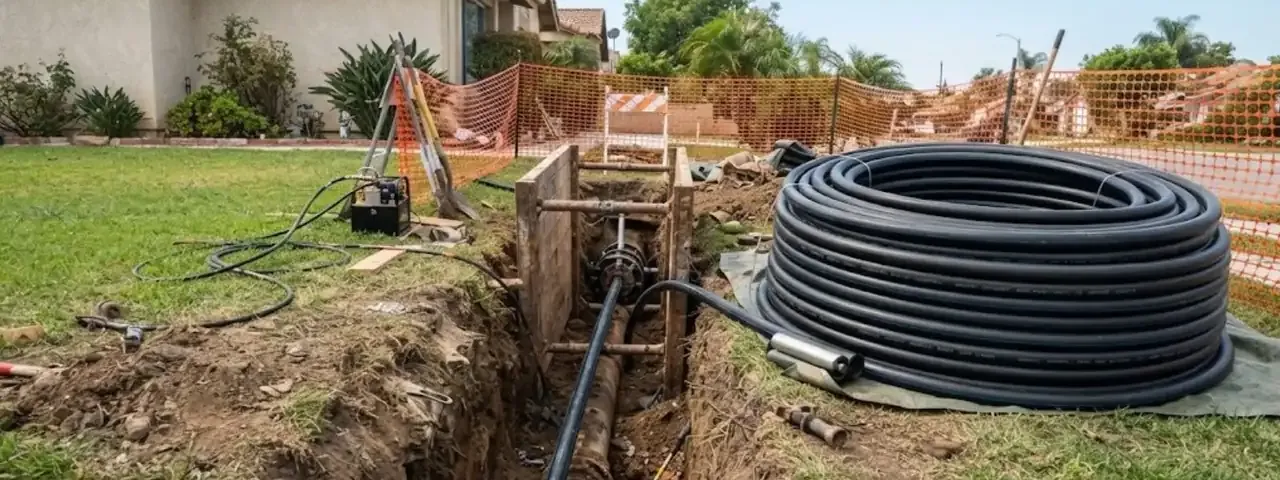
Sewage in the home or a sunken patch in the yard
Wastewater rising in a tub, a floor drain that will not hold water out, or a soggy spot above the buried line are urgent. They mean the line is blocked, broken or both. Stop running water, switch off any appliance that drains, and keep children and pets clear of the wet area.
Photograph what you see and write down when it started. That record helps your landlord, your insurer or the city if there is a question about whose line failed.
Signs a sewer line is damaged, not just clogged
A clog can be cleared. Damage has to be repaired. These clues help tell them apart.
Cleaning does not last
The line is cleared and backs up again within weeks, which often means roots or a broken joint.
Several drains slow together
Fixtures gurgle at the same time because the main line is restricted.
Sewer odor outside
A smell near the yard or driveway can point to a leak in the buried pipe.
Sunken or wet ground
Soil that settles above the line may have washed into a crack.
How the plumber finds the break
Guessing leads to digging in the wrong place, so diagnosis comes first. A drain camera on a flexible cable travels through the line from a cleanout and shows the pipe wall on a monitor. The plumber looks for cracks, offset joints, roots, sagging sections and collapsed pipe.
A locator can then mark the surface above the problem, so any excavation is limited to a small area. A sewer camera inspection is also useful when you want a record of the damage for an insurer or landlord.
Repair choices compared
The right method depends on the pipe, the damage and where the line runs.
| Method | Best when | Trade-offs |
|---|---|---|
| Spot repair | One short section is cracked or offset | Needs a small excavation, leaves the rest of the pipe old |
| Trenchless lining | The pipe is intact enough to hold a liner and access is limited | Does not fix a collapsed or badly offset pipe, and reduces the inside diameter a little |
| Pipe bursting | A long run needs replacing with little surface digging | Needs entry and exit pits and suits only some pipe conditions |
| Open trench replacement | The pipe has collapsed, or has multiple breaks along its length | Most disruptive to yards and driveways, though the full pipe is new |
A camera look decides which of these is realistic for your line.
Sewer line problem and no time to guess?
Call (855) 575-2890 and a licensed plumber will talk through your options.
Cast iron and clay pipe in older homes
Before plastic pipe became common, building lines were often cast iron or clay. Cast iron corrodes from the inside and can flake into rough scale that catches debris. Clay comes in short sections joined with mortar or rubber, and roots find those joints easily.
That does not mean every older pipe has failed. Many are still serving a home. It does mean a camera look is worth doing when problems repeat, and it explains why a section may need replacing while the rest stays.
Roots and the joints they use
Roots follow moisture and enter through small gaps. Once inside they grow into a mat that catches paper and grease. Cutting them back helps for a while, and a repair of the joint stops them coming back.
What Bell's housing age means for the sewer lateral
Census ACS figures show that about 67.6% of Bell's housing units were built before 1960. A lateral from a house of that period is likely older than the home next to a newer build. That makes a camera look a sensible first step when you buy, rent or keep a house in that age range.
Also ask about who is responsible for which part of the line. Bell Public Works can tell you where your responsibility ends and where the city line begins, so ask them before assuming either way.
Source type: Census ACS housing data and City of Bell Public Works
From first call to finished repair
Here is the usual order, so nothing about the job is a surprise.
- 1
Stop the problem getting worse
Water use stops and the plumber clears enough of the line to relieve a backup if needed.
- 2
Run the camera
The pipe is recorded from the cleanout to the point of damage.
- 3
Review the options
You see the footage and hear which repair methods fit, and what each means for your yard.
- 4
Get the price in advance
A clear price is given before work starts, along with any permit step.
- 5
Repair and retest
After the work the line is run again with water and, if useful, scoped to confirm the fix.
What shapes the price of a sewer line repair
Repair prices run from small to large, and the reason is almost always the pipe, not the plumber. You will get a clear price once the damage is known.
Homeowner policies usually cover sudden accidental damage and may not cover a line that wore out or was invaded by roots. Read your policy or ask the insurer what applies. Renters should tell the landlord right away and check renter's insurance for the contents they lost.
Call (855) 575-2890 to talk through the repair and hear a clear price before work starts.
Call (855) 575-2890When cleaning is enough and when it is not
If a camera shows a pipe in decent shape and a simple blockage, cleaning is the right fix. Sewer line cleaning is covered separately. If the pipe is cracked or sagging, cleaning will keep failing.
A hydro jet can also prepare a line for lining by removing buildup, but only after the camera confirms the pipe can take it.
Sewer Line Repair questions
Yes. The line at (855) 575-2890 is answered 24/7. Stop using water, keep people away from sewage and call. Same-day appointments are available when schedules allow, and the first step is usually to relieve the backup and look at the pipe.
Repeated backups after cleaning, roots on the camera, a visible crack or a sunken yard point to repair. A single blockage with a healthy pipe usually only needs cleaning.
Not always. Trenchless lining and spot repairs limit digging, but a collapsed pipe often needs an open trench. The camera footage shows which applies.
Ask Bell Public Works where your responsibility ends. It depends on the property and where the connection to the main sits, so do not assume before you check.
Permit rules vary, so ask the Bell building department. They can tell you what applies to your work and whether an inspection is needed. The work itself falls under the California Plumbing Code, which is based on the UPC.
Tell your landlord or property manager in writing, with photos and dates. If there is sewage in the unit, call the 24/7 line too, since the backup may not wait.
Yes. A cracked line can leak into the soil while still draining. Sewer odor outside or a wet patch over the line are clues, and a camera can confirm whether the pipe is leaking.