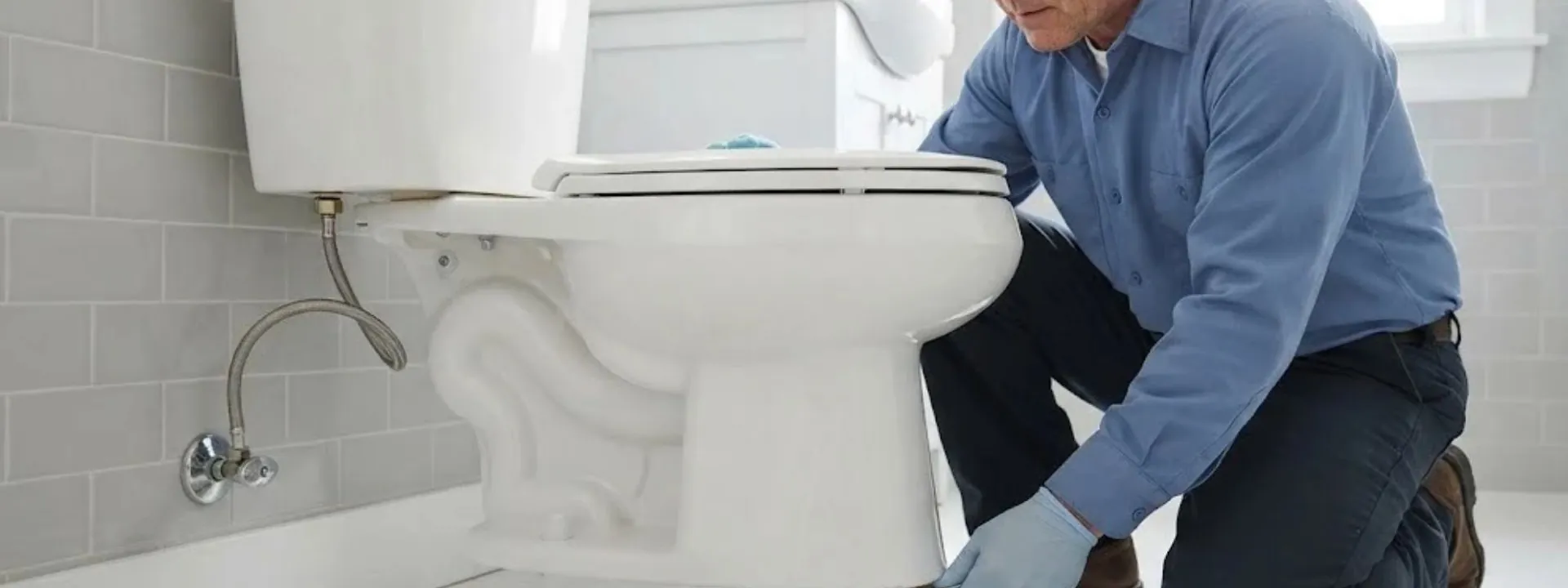
Toilet overflowing or leaking onto the floor
Water on the bathroom floor usually comes from one of three places. The bowl is clogged and rising, the tank or its supply line is leaking, or the seal under the toilet has failed. Each one calls for a different fix, so the first job is working out which it is.
If the bowl is rising, do not flush again. Lift the tank lid and push the flapper down into its seat, or close the wall valve, so no more water arrives. Then keep towels at the base and move anything valuable off the floor.
If water seeps from the base only after a flush, the wax ring or the closet flange is the likely cause. That leak is slow and easy to ignore, but it soaks subfloor material from below. Tell the plumber when you first noticed the dampness.
While you wait for the plumber
These steps are safe for most homeowners and tenants, and they limit the damage before the visit.
- Close the valve on the wall behind the toilet by turning it clockwise
- Do not flush or run the tub and sink if the bowl is full and rising
- Lay towels around the base and wipe standing water so nobody slips
- Take photos of the damp floor and walls for your insurer or landlord
- Keep children and pets out of the bathroom if sewage came up
- Never mix drain chemicals, because they can splash back and burn skin
What each toilet symptom usually means
The part that fails tells you how big the job is. This table lists the common patterns and what is safe to check yourself.
| Symptom | Likely cause | Safe first check | When to call |
|---|---|---|---|
| Tank keeps refilling or hissing | Worn flapper or fill valve | Lift the lid and see whether the flapper sits flat | If adjusting the float does not stop it |
| Weak or partial flush | Clogged rim jets or low tank water level | Check the water line inside the tank | If the bowl still drains slowly |
| Water around the base | Failed wax ring or loose closet bolts | Dry the floor and watch after one flush | Right away, since the subfloor can soak |
| Handle loose or limp | Broken lever or chain | Look for a chain that has come off the flapper | If the chain is fine and nothing lifts |
| Bowl will not drain | Clog in the trap or the drain line | Use a flange plunger gently | If other drains also gurgle or back up |
| Wet supply line or valve | Cracked line or worn valve packing | Wipe it dry and look for a fresh drip | Immediately if the valve will not shut |
A toilet that fails to drain along with a nearby tub or sink often points to the main line, not the fixture.
Why a quiet running toilet wastes so much water
A flapper that barely leaks makes almost no sound, so the loss goes unnoticed for months. The EPA WaterSense program notes that a worn flapper can silently leak thousands of gallons a year. The only sign may be a higher water bill.
The EPA also describes a simple dye test. Put a few drops of food coloring in the tank and wait about 10 minutes without flushing. If color shows up in the bowl, the flapper or seat is leaking, and a plumber can swap the part during one visit.
Mineral scale makes this worse. Golden State Water reports that its Bell-Bell Gardens supply averages 12 grains per gallon, which the USGS scale calls very hard. Scale can roughen the flapper seat and clog fill valve ports, so a part may wear out sooner at addresses served by that system. Your bill shows who supplies your water.
Toilet still leaking after you shut the valve?
Call (855) 575-2890 and tell us what you see. The line is open day and night.
How a toilet replacement visit goes
Sometimes a cracked bowl or a repeat leak makes a new fixture the better choice. Here is the usual order of work.
- 1
Shut off and drain
The plumber closes the supply valve, flushes the tank empty and sponges out what is left in the bowl.
- 2
Disconnect and lift
The supply line comes off, the bolts are removed and the old toilet is lifted straight up and carried out.
- 3
Check the flange
The plumber inspects the closet flange for cracks or rust and repairs it if it is not solid. A bad flange will leak under any new toilet.
- 4
Set the new fixture
A fresh wax ring goes down, the bowl is seated and the bolts are tightened evenly so the porcelain does not crack.
- 5
Test and review
The tank is filled, the toilet is flushed several times and every joint is checked dry. You see the result before the plumber leaves.
Repair or replace the toilet
Most toilets can be repaired. A few situations tip the choice toward a new one.
| Situation | Repair usually works | Replacement usually makes sense |
|---|---|---|
| Running or ghost flushing | New flapper or fill valve | Tank is cracked or the seat is pitted |
| Rocking on the floor | New wax ring and tightened bolts | Bowl base is cracked |
| Frequent clogs | Clear the trap and check the vent path | Older fixture that clogs even after clearing |
| Leak at the tank bolts | Replace the bolt washers | Tank has hairline cracks |
| Wobbly handle or parts | Replace the lever kit | Several worn parts at once |
What affects the cost of toilet repair
Toilet jobs range from a ten minute part swap to a full replacement with floor repair. We give the price before work starts, based on what the plumber finds.
Homeowner policies often respond to sudden accidental water damage, such as a supply line that bursts, but usually not to the worn part itself or a slow leak. Read your policy or ask your insurer. Renters should tell the landlord in writing and check their renter's policy.
Call (855) 575-2890 for a clear price on your exact toilet problem.
Call (855) 575-2890Renters and rental properties in Bell
Census data shows about 75 percent of Bell housing is renter occupied, so many toilet calls start with a tenant. Tell your landlord or property manager as soon as water is on the floor, and keep the message in writing. Ask who approves the work before the plumber begins.
If the toilet is backing up and a tub or sink nearby is gurgling too, the problem may be further down the line. In that case drain cleaning or a look at the main line is the better next step. A slow leak that keeps returning may deserve leak detection to find where the water is actually going.
Permits, licensing and who does the work
A straight toilet swap in the same spot rarely needs more than a careful installer. If the job moves the drain or changes piping, permit rules vary, so ask the Bell Building and Safety Division at City Hall, 6330 Pine Ave. Toilet installation falls under the California Plumbing Code, which is adopted statewide and based on the UPC.
Before anyone works in your home, you can check a plumber at cslb.ca.gov. Look for an active license that lists a plumbing classification. We serve Bell, and our neighbors in Bell Gardens and Cudahy also call the same line.
Toilet Repair questions
Yes. The line answers 24/7, including nights, weekends and holidays. Same-day appointments are offered when available.
While you wait, close the wall valve behind the toilet, stop flushing and put towels around the base. Photos of the water damage help with insurance and landlord reports.
Water is slowly leaking from the tank into the bowl, usually past a worn flapper. The fill valve then turns on to refill the tank. The EPA dye test with food coloring will confirm it, and the repair is normally quick.
You can flush it once by pouring a bucket of water into the bowl, but the tank will not refill. Use another bathroom if you have one until the plumber arrives.
Treat it as urgent. The leak may be small, but water at the base can soak the subfloor and lead to rot. Shut the supply valve and call to have the wax ring and flange checked.
If you rent, yes. Most leases require notice, and the owner may want to approve the repair or send their own vendor. Send the message in writing and keep photos of the damage.
Scale can build up on flappers, seats and fill valve ports. For addresses served by Golden State Water, the average hardness is 12 grains per gallon. Ask your water company if you are served by another supplier.