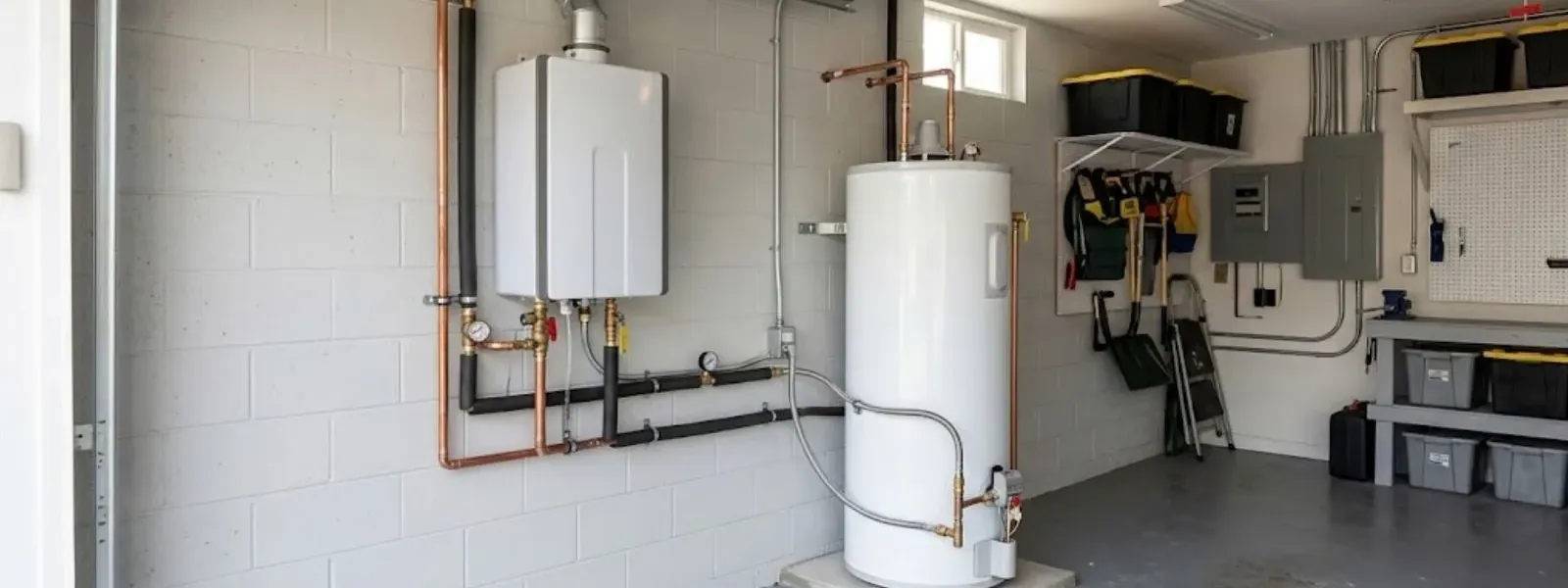
Service Visits for Tankless Units, Not Just Repairs
Some plumbers will repair a tankless heater but not maintain one. This visit includes service, so a unit that is still running can be flushed and checked before it fails.
The plumber looks at the water flow, the vent connection, the gas supply, and the inlet filter screen. Error codes shown on the unit are read and matched to the manufacturer's manual. Fault codes are a symptom, and the visit looks for the cause behind them. A unit that has quit entirely falls under water heater repair, with the same checks plus part testing.
What to do before the plumber arrives at a tankless unit
Tankless units burn gas at a high rate and vent hot exhaust, so a few cautions matter before a service visit.
- If you smell gas, leave the building and call 911 and the gas utility from outside
- Do not remove the front cover, change the vent or open the gas line yourself
- Turn off power to the unit and close the gas valve only if you can reach them safely
- Skip homemade descaling mixes unless the manufacturer instructions call for them, and never mix cleaning chemicals
- Run hot water gently to check the temperature before a child uses it, since the unit can deliver very hot water
- Write down any error code shown on the display and the date it first appeared
Flushing and Descaling Your Tankless Heater
Descaling is the most common maintenance task on a tankless unit and the one owners put off. Minerals in the water bake onto the heat exchanger and narrow the passages. The result is less flow, longer waits for hot water, and error codes. A softener or filter ahead of the heater can slow that buildup.
How it is done
The plumber isolates the unit, connects hoses to the service valves, and circulates a descaling solution through the heat exchanger with a small pump. The unit is rinsed, the inlet screen is cleaned, and the valves are returned to normal.
How often
The schedule depends on the manufacturer and on water hardness, so follow the manual for your model. Harder water means scale builds faster, which is why hardness matters in Bell.
What the Local Hardness Numbers Mean for a Tankless Unit
The Golden State Water Company 2026 Annual Water Quality Report for the Bell-Bell Gardens system lists hardness as calcium carbonate. The figures apply to addresses served by GSWC.
| Measure | GSWC Bell-Bell Gardens figure | USGS class |
|---|---|---|
| Lowest reading | 137 mg/L, or 8.0 grains per gallon | Hard (121 to 180) |
| Average | 210 mg/L, or 12 grains per gallon | Very hard (over 180) |
| Highest reading | 280 mg/L, or 16 grains per gallon | Very hard (over 180) |
Tract 180 Mutual Water Company and the city part of Bell Gardens are separate providers, so those addresses should ask their water company for a hardness figure.
Sizing by Temperature Rise and Flow Rate
Tankless units are rated by the highest temperature rise they can deliver at a given flow rate. Temperature rise is the water temperature you want at the tap minus the temperature of the water coming in.
To size a unit, add up the flow rates, in gallons per minute, of the hot water fixtures that may run at the same time. The Energy.gov guide gives a floor of at least 3.25 gallons per minute for whole-house demand-type units.
Ask the plumber to walk through your showers, sink, dishwasher, and laundry. A busy household may need more capacity than the smallest whole-house unit. Bell averages 3.49 people per household in the 2020 Census, so overlapping use is common.
What to do before the plumber arrives at a tankless unit
A tankless swap is a project, not a like-for-like trade. These points decide whether it fits.
- Is the gas line sized for the burner on the unit you want?
- Does the vent route to the outside, and is there room to run it?
- Does the household run several hot fixtures at once?
- Is there a softener or a plan to add one for hard water?
- Has the landlord or property manager approved the change, if you rent?
- What does the Bell building department require? Permit rules vary, so ask the city.
Gas Line and Venting Upgrades
Tankless burners can draw more gas at once than a typical tank burner. An older gas line may need a larger pipe or a new run to the heater, and the plumber measures the load before ordering anything.
Venting is the second hurdle. Tankless units need specific vent materials and a clear path out. The install options are covered in water heater installation, which includes the safety parts that go around any heater.
If you smell gas at any time, leave the building and call 911 and the gas utility from outside. Gas and vent work for a new unit falls under the California Plumbing Code, which is based on the UPC, and permit rules vary, so ask the city building department.
Book a flush or a sizing review
Call (855) 575-2890 and tell the dispatcher the model and what the unit is doing.
When a Tankless Unit Needs Attention
Signs that point to scale, flow, or a fault.
Lukewarm water
Scale in the heat exchanger or a clogged inlet screen can cut heating capacity.
Error code on the display
Codes vary by model. The manual lists the meaning, and the plumber finds the cause.
Water shuts off during use
Low flow can keep the burner from firing, so the unit stops until flow increases.
Unusual noise
Rumbling or knocking can come from scale buildup or air in the lines.
What Affects Tankless Service and Install Costs
No prices are posted on this page, because the number depends on the unit and your home. You get a clear price before work starts.
Maintenance and upgrades are not insurance events. Homeowner policies usually cover sudden accidental damage, not worn parts or routine service. Renters should ask the landlord who pays and keep the answer in writing.
Call (855) 575-2890 for a price based on your unit and your layout.
Call (855) 575-2890Tankless Water Heater questions
It depends on the manufacturer and on the hardness of your water, so follow the manual for your model. In very hard water, such as the GSWC average of 12 grains per gallon, scale builds faster, which argues for checking the manual and acting on it.
Yes. The plumber reads the code, checks flow, gas, venting, and the screens, and finds the cause. The code points toward the problem and does not replace testing.
It depends on your gas line, vent path, and how many fixtures run at once. Tankless units are sized by temperature rise and flow rate, and the plumber will review those before recommending one.
Scale in the heat exchanger reduces flow and heat transfer. Addresses on the GSWC system average 210 mg/L, which is very hard on the USGS scale. Check with your water company if you are not on GSWC.
The 24/7 line takes calls at any hour and same-day appointments are offered when available. For a planned flush, call and describe the unit, and the dispatcher sets a time.
The landlord or property manager usually owns the equipment and decides. Report error codes or cold water in writing and keep the dated message.