What to do while you wait for the plumber
A few quiet minutes of prep keep a bad clog from turning into a wet floor. None of these steps need tools.
- Stop using the blocked fixture and ask everyone in the home to hold off on showers and laundry
- Remove standing water from a sink with a cup and bucket instead of letting it sit
- Clear the cabinet under the sink so the plumber can reach the trap and wall pipe
- Put towels around a toilet or floor drain that is close to overflowing
- Skip chemical drain openers, since the liquid can sit in the pipe and splash on the plumber
- Note which other fixtures gurgle or slow down, because that pattern points to the line the clog sits in
Which drain, which cause, which method
Where the blockage shows up tells the plumber a lot before any tool comes out of the truck.
| Fixture or symptom | Usual cause | Typical method |
|---|---|---|
| Kitchen sink | Grease, food paste and soap film packed in the trap and branch pipe | Cable machine, sometimes trap removal |
| Bathroom sink | Hair, toothpaste and soap scum near the stopper and trap | Hand tools or a small cable |
| Shower or tub | Hair wrapped around the strainer and a slick layer of soap inside the pipe | Small cable, then a flush of the line |
| Toilet that will not clear | Too much paper, a wipe, or a blockage past the trap | Closet auger, then a larger cable if needed |
| Laundry standpipe | Lint and detergent residue building up in a narrow pipe | Cable, then a slow test of the washer discharge |
| Several fixtures slow or backing up together | A blockage in the main drain line | Larger cable, hydro jet or camera. See sewer line cleaning |
This table is a guide. The plumber confirms the cause on site before choosing a tool.
Kitchen sink clogs and what grease does inside the pipe
Kitchen drains fail differently from bathroom drains. Cooking fat leaves the sink as a warm liquid, then cools and sticks to the pipe wall. Food particles and soap cling to that sticky coat, and the opening shrinks a little more with every sink of dishes.
The result is a drain that first runs slowly, then gurgles, then stops. A plunger can push a soft blockage a short way, but it rarely removes the coating that caused it. That is why a sink can clear for a day and clog again by the weekend.
A cable machine cuts through the buildup and pulls out most of it. If the pipe wall is heavily coated, the plumber may suggest hydro jetting so water pressure scrapes the whole length clean.
Snaking, jetting or a camera: how the plumber chooses
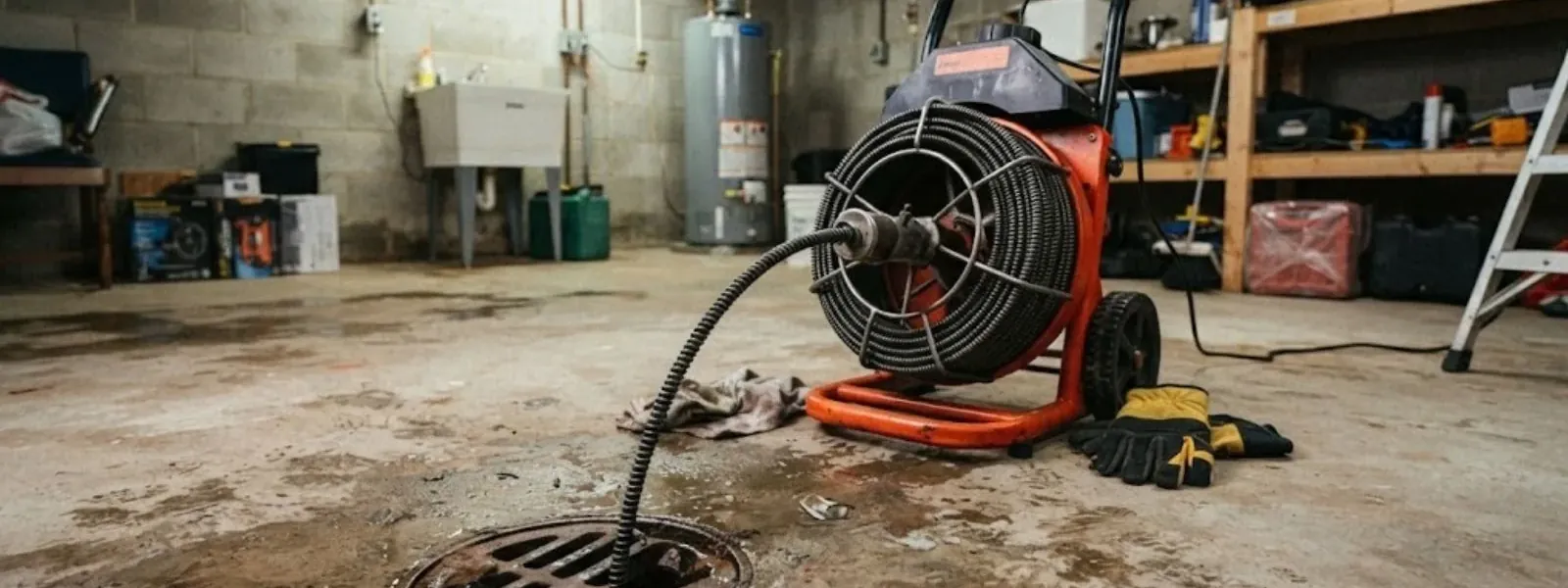
A drain snake, also called a cable or auger, is a coiled steel line that spins through the pipe. It is the first tool for most fixture clogs because it is quick and works in tight spaces. Its limit is that it often bores a hole through a blockage and leaves the pipe wall coated.
Hydro jetting sends high-pressure water through a hose and washes the pipe interior. It suits grease, scale and silt, and it is less suited to damaged pipe. A drain camera is the third option, and it answers a different question, which is what is actually in the pipe.
When a camera comes first
If a drain has been snaked and has clogged again, a camera look shows whether roots, a bellied section or a broken joint is the real cause. A sewer camera inspection also helps before any jetting on older lines, which keeps pressure away from weak pipe.
Drain stopped and water rising?
Call (855) 575-2890 any hour. The line is answered around the clock.
How a drain cleaning visit runs
The order of work is simple, and you can ask the plumber about any step.
- 1
Find the blockage
The plumber checks the affected fixture, then asks what else in the home is slow, since that narrows down where the clog sits.
- 2
Pick the tool
A small cable, a larger machine, a jet or a camera is chosen to match the pipe size and the likely cause.
- 3
Clear and test
Once water moves, the plumber runs the fixture for a while to confirm the drain holds up under normal flow.
- 4
Explain what was found
You get a plain description of what came out and whether it points to a deeper pipe problem.
- 5
Agree on any follow-up
If the clog was a symptom of damage, the price for that work is given before it starts.
Older Bell homes and shared drain lines
Census data from the American Community Survey shows that about 67.6% of Bell's housing units were built before 1960. Drain lines in homes of that age have had many decades of use, and joints, offsets and scale are more common than in newer buildings. If your drain clogs repeatedly, ask the plumber whether a camera look makes sense.
The same survey puts Bell at roughly 75% renter-occupied, with about 28.6% of units in buildings of two or more units. In a duplex or small apartment building, one clogged branch can affect more than one unit. Tell your landlord or property manager early, and write down the date and what you saw.
Source type: Census ACS housing data
What not to pour or flush
Most repeat clogs trace back to a few habits that are easy to change.
Cooking fat and oil
Wipe pans with a paper towel and bin it. Liquid fat cools inside the pipe and hardens.
Coffee grounds and rice
Grounds pack into a dense paste and rice swells with water. Neither belongs in a kitchen drain.
Wipes marked flushable
They hold together far longer than toilet paper and catch on rough pipe walls. Put them in the trash.
Hair in the shower
A cheap strainer over the shower drain catches most of it. Empty it every few days.
Harsh chemical openers
They can sit in a fully blocked pipe, irritate skin and make a later repair more hazardous.
When the whole house backs up, it is not a sink problem
If a shower gurgles when the toilet flushes, or water shows up in a floor drain after the washer runs, the blockage is probably in the main drain line. A fixture-level cable will not reach it. The plumber needs a larger machine and access through a cleanout or a roof vent.
That job is covered on the sewer line cleaning page. Treat it as urgent, because waste can come up through the lowest drain in the building. Stop using water and call the 24/7 line.
What affects the price of drain cleaning
Drain cleaning prices vary because the work varies. A clear price is given before work starts, after the plumber has seen the problem.
Homeowner policies usually respond to sudden accidental damage, not to a slow clog or worn pipe, so a routine cleaning is often a maintenance cost. Read your policy or ask your insurer if water has already damaged floors. Renters should tell the landlord and check what their renter's insurance covers.
Call (855) 575-2890 and describe the drain, and the plumber will explain what the visit involves.
Call (855) 575-2890Shower and tub clogs, and the small leak you might miss
Tub drains collect hair around the overflow and strainer, and the pipe wall behind it grows a layer of soap residue. Pull the strainer first, since a hair mat there is the cause more often than a deep clog.
Slow drains can also hide a leak. If the ceiling below a bathroom is stained, or the floor around the tub feels soft, a drain line may be leaking and not only clogged. A leak behind a wall needs a different tool, and our leak detection service covers it.
Drain Cleaning questions
Yes. The line at (855) 575-2890 is answered 24/7, including nights, weekends and holidays. A plumber is dispatched to Bell and nearby towns, and same-day appointments are available when schedules allow.
While you wait, stop using the blocked fixture, move belongings away from the drain and keep a towel by any toilet or floor drain that might overflow.
Grease and soap film often stay on the pipe wall after a quick snaking. New food particles stick to that coating and the pipe narrows again. A hydro jet or a deeper cleaning can remove the coating, and a camera can rule out a damaged section.
One slow fixture usually means a local clog. Several fixtures slowing at once, gurgling after a flush, or water in a floor drain point to the main line. If that sounds like your home, stop water use and call.
A cable or jet used correctly is safe on sound pipe. Old, cracked or collapsed lines are fragile, which is why the plumber may run a camera first. Tell the plumber if the home is older or if the pipe has been repaired before. If a camera shows a section must be replaced, that work falls under the California Plumbing Code, based on the UPC, and permit rules vary, so ask the city building department.
That depends on your lease and the cause. Tell your landlord or property manager as soon as a drain stops, and keep a note of the date. If the cause was something a tenant put down the drain, the lease may treat it differently.
It is best not to. Chemicals can sit in a fully blocked pipe, and the plumber then works around a corrosive liquid. A plunger and a bucket are safer first steps.
Yes. Main drain blockages call for larger equipment, and the sewer line cleaning page explains that service. If the cleaning keeps failing, a camera inspection can show why.