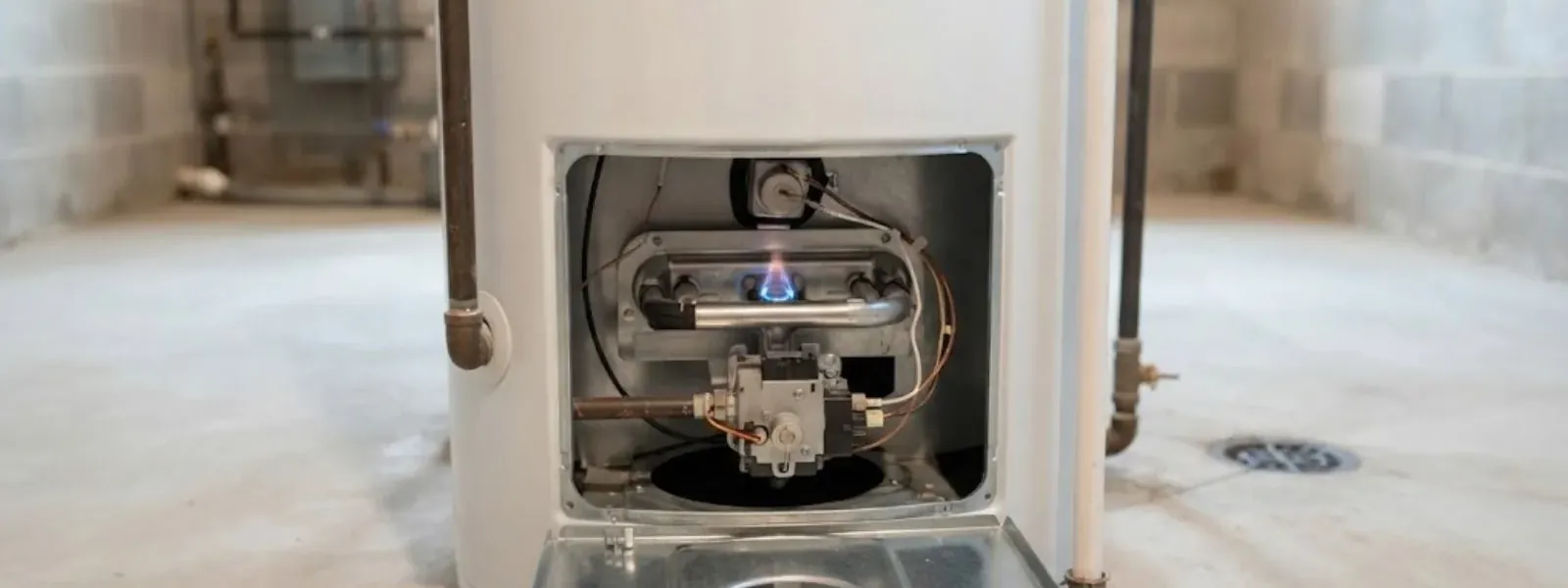
What a thermocouple actually does
A thermocouple is a short metal probe that sits in the pilot flame. The heat produces a tiny electrical signal, and that signal holds the gas valve open. If the flame goes out, the signal stops and the valve closes, which keeps raw gas from filling the room.
That is why the pilot dies when you release the knob. The flame is there, but the sensor is not sending enough signal to hold the valve. Soot on the tip, a bent probe or an aging sensor can all weaken the signal.
Gas smell comes first
If you smell gas, leave the building and call 911 and the gas utility from outside. Do not try to light anything. This guide applies only when there is no odor, and a stuck pilot never means you should bypass the safety valve.
Symptoms and what they usually mean
Several faults mimic a bad thermocouple. This table helps you sort them before you buy a part.
| What you see | Common cause | Next step |
|---|---|---|
| Pilot lights but dies on release | Weak thermocouple signal | Test or replace the sensor |
| Pilot will not light at all | No gas flow or clogged orifice | Check supply and have the pilot assembly cleaned |
| Pilot lit but burner never starts | Thermostat or gas control fault | Plumber diagnosis |
| Pilot flame yellow or weak | Dirty orifice or air problem | Do not relight repeatedly, call a plumber |
| Pilot goes out in wind or when doors close | Draft or venting issue | Check air supply and vent |
How the replacement goes
The visit follows a set order. Most of the time goes to checking safely, not to the swap.
- 1
Gas off and heater cool
The plumber closes the gas supply to the heater and lets the unit cool before touching anything.
- 2
Access the burner
The burner door comes off and the pilot assembly is exposed. The thermocouple connects at the gas control and sits in the pilot flame.
- 3
Compare the old and new part
The replacement must match the length and fittings. A wrong length sits outside the flame and fails the same way.
- 4
Install and tighten gently
The new probe is placed in the bracket and the nut is snugged to the gas control. Overtightening can damage the fitting.
- 5
Relight and leak test
The pilot is relit and held for the usual period, then the plumber checks the connections for gas with a proper method and confirms the burner runs.
Rented gas heaters in Bell
The ACS survey found about 75% of Bell housing units were renter-occupied, and the 2020 Census counted 3.49 persons per household. A gas water heater serving that many people is in daily use, so a pilot that dies is noticed fast.
If you rent, report it to the landlord in writing, because gas work belongs to licensed professionals and approved repairs. Keep a note of the date the pilot first failed. Permit rules vary, so ask the Bell Building and Safety Division at City Hall.
Source type: US Census data
Safe things to do before the call
None of these involve touching the gas connections.
- Confirm there is no gas odor in the room
- Check that the stove or other gas appliances work
- Read the lighting instructions on the unit and note the model
- Make sure nothing is stored against the heater or blocking air
- Note how long the pilot stays lit after you release the knob
- Take a photo of the data plate
What drives the cost of this repair
The part itself is small, but the price reflects more than the part. These factors decide what a plumber quotes.
Insurance typically does not cover a worn sensor, because it is routine wear. It may apply if a related failure caused water damage, so photograph any leak and ask your insurer.
Call (855) 575-2890 and describe the pilot behavior so the plumber can explain the likely repair.
Call (855) 575-2890Pilot dying again and again?
Call (855) 575-2890 and say how long the pilot stays lit.
Not every heater has a thermocouple
Many newer gas heaters use other ignition and flame sensing systems, such as electronic igniters and flame rods. We cannot say which type you have without seeing the data plate, so check the model label or look at the control. A heater without a standing pilot does not have this part.
If your unit uses electronic ignition, the same symptom, a burner that lights and then shuts off, points to a different part. Do not buy a thermocouple from a photo. Match the model number, or let a plumber identify it. See water heater repair for the wider set of fixes.
When replacing the heater makes more sense
A sensor is a minor repair on a sound tank. If the tank leaks, if rust shows at the base or if the manufacturer date on the data plate is old, a new part may only delay the real problem. Check the warranty paperwork too.
In that case, water heater replacement may be the better use of money. Neighboring readers in Bell Gardens and Cudahy face the same choice.
Quick answers
The classic sign is a pilot that lights while you hold the knob and goes out when you let go. A plumber can confirm with a meter.
Some homeowners do. It involves gas connections, so a mistake can cause a leak. If you are not confident, call a licensed plumber.
The sensor may be fine and the fault may be in the gas control or thermostat. Do not keep relighting, and have it diagnosed.
Drafts through the vent or around the heater can blow the flame out. Venting problems are a safety issue, so have them checked.
Permit rules vary, so ask the Bell Building and Safety Division at City Hall, (323) 588-6211. Replacing a sensor is smaller than replacing the heater. The California Plumbing Code, which is based on the UPC, covers water heater work statewide.
Yes, if it keeps going out or you smell gas. Tell the landlord in writing. If you smell gas, leave and call 911 and the gas utility from outside.