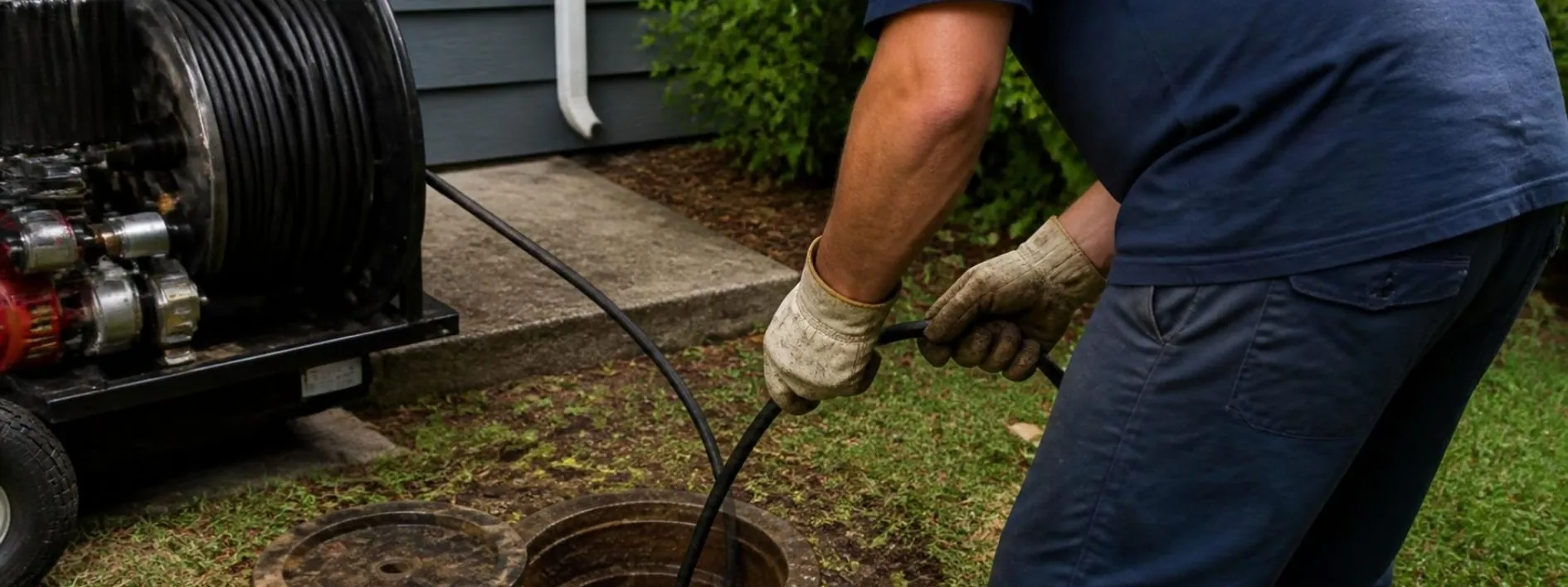
Where the water goes and why it stops
A buried gutter drain, sometimes called a downspout lateral, is a pipe that picks up water from one or more downspouts and carries it to a drain outlet. Some lead to a yard drain, a curb outlet or another disposal point. We cannot say how your property is plumbed, because layouts differ from lot to lot, and many were altered over the years.
What we can say is how they fail. Leaves, shingle grit and silt wash into the pipe and settle at low spots. Over time the pipe fills from the bottom until water has no room to move.
Common causes of a blocked buried drain
The cause decides the cleaning method. A camera is the way to tell them apart.
| Cause | How it forms | Likely clearing method |
|---|---|---|
| Silt and sand | Roof grit and soil wash in and settle | Hydro jetting or flushing |
| Leaves and debris | Gutters shed material into the downspout | Snaking, then flushing |
| Tree roots | Roots enter at joints seeking water | Cutting head, then camera check |
| Collapsed or offset pipe | Soil movement or age breaks the line | Repair or replacement |
| Wrong connection | Line was tied to something not meant for it | Camera, then correction |
| Crushed pipe | Vehicle load or digging damage | Excavation and repair |
How the cleaning and inspection usually go
The order below keeps the work from guessing.
- 1
Locate the access point
The plumber looks for a cleanout, the downspout base or a yard drain grate where the line can be reached.
- 2
Clear the blockage
Light debris may clear with a drain snake. Packed silt or heavy buildup often calls for a hydro jet, which uses pressurized water to scour the pipe.
- 3
Run a camera
A drain camera on a flexible cable shows the pipe walls, joints and any low spots. This reveals roots, breaks or a pipe that ends in the wrong place.
- 4
Trace the route if needed
Locating tools can follow the camera signal from above ground. This matters before any digging.
- 5
Flush and confirm flow
Water is run through the line to confirm it drains. The plumber reports what was seen and what repair, if any, is recommended. Ask for the camera findings in plain words, including the distance to any problem and what the pipe looked like around it.
Honest limits
No one can promise what a buried line will show before the camera goes in. A pipe may be clear for the first stretch and broken further down. Some lines also turn out to be shorter, longer or connected differently than the owner believed. If the camera stops at a collapse, the plumber will say so, and the next step is a repair decision, not another round of cleaning.
Who is responsible for what, in Bell
The City of Bell Public Works page is the right place to ask where private responsibility ends and public responsibility begins. We have no verified information on how your property connects to the city system, so we will not guess. Ask Bell Public Works before you assume a line is public or private.
Bell sits on the west bank of the Los Angeles River and has an industrial corridor along Bandini Boulevard. For a business owner there, the practical tie-back is that site drainage often needs a review of the whole property, not just one downspout. Ask the city what applies to your parcel, and keep any written answer with your property records.
Source type: City of Bell Public Works page
Not sure where your downspout drain goes?
Call (855) 575-2890 and a plumber can explain how to find out.
Storm drain work for commercial properties
Commercial sites add parking lots, loading areas and larger roofs to the picture. Storm drain cleaning for a business can mean catch basins, trench drains and several downspout lines tied together. Debris and sediment from paved surfaces collect in these structures.
A property manager should keep a record of when drains were cleaned and what was found. If a lot floods during rain, photograph it and note the time. The plumber can then use that information to target the camera work. See commercial plumbing for what business services cover.
What to note before the plumber arrives
A few observations make the visit shorter and the diagnosis sharper.
- Which downspouts feed the line, and which ones back up
- Whether water rises in a yard drain or only at the gutter
- How long the water stays after rain stops
- Any trees or large shrubs near the suspected route
- Whether the line has been cleaned before and what was found
- The location of any cleanout cap or grate
Prevention you can actually do
Keep gutters and downspout screens clear, and trim roots that approach the drain path. Check that downspout extensions send water away from foundations. When water backs up after a storm, avoid pouring chemicals into the drain, since they do not clear roots or silt.
If a line has been cleared once and clogs again within a season, the pipe likely has a structural problem. That is the point to schedule a camera inspection. Related work is described under hydro jetting and sewer inspection.
Nearby service
The same drain problems show up in Maywood and Bell Gardens, both densely built towns. The 24/7 line covers both.
Quick answers
If the downspout ends in a pipe that goes into the ground or a grate in the yard, it likely ties into a buried line. A plumber can trace it with a camera.
A hose may flush light debris. It does not clear roots or packed silt, and forcing water can push debris further down.
It can if the pipe is already weak. A camera look first lets the plumber choose the safest method.
It depends on the property and how the line is connected. Ask Bell Public Works, because we do not have verified information on your specific case.
Not always. Clearing removes the clog, but roots or a broken pipe will bring it back. The camera shows which one you have. If you hire out repair work on a buried line, the CSLB License Check at cslb.ca.gov shows whether the license is active and lists a plumbing classification.
Large paved areas bring more debris to catch basins and trench drains. Ask the city about any requirements for your property.