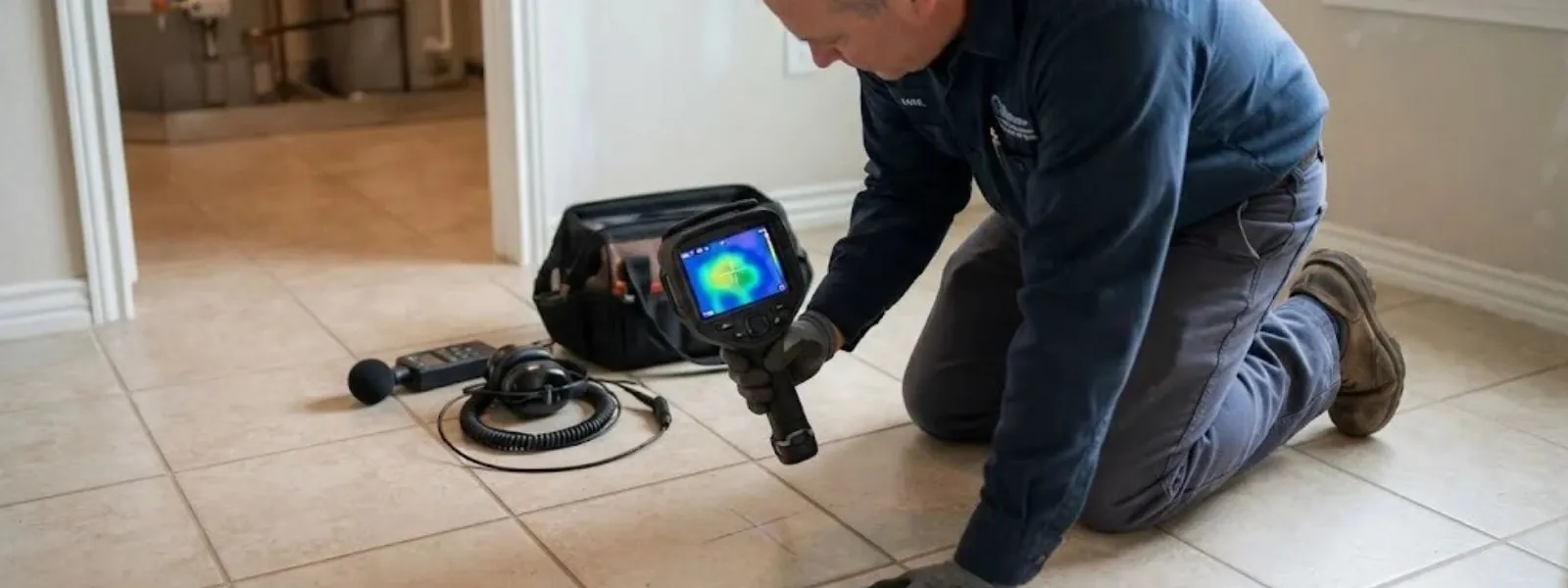
Three kinds of smart leak protection side by side
The names on the box change from brand to brand, but the devices fall into a few simple groups. This table shows what each group does and where it falls short.
| Device type | What it does | Best fit | Main limit |
|---|---|---|---|
| Point sensor | Sits on the floor and sends an alert when its contacts get wet | Under a water heater, sink, toilet or washer | Only knows about water that reaches it |
| Automatic shutoff valve | Closes the main supply when a sensor or flow pattern signals a leak | Owners who can modify the main line | Needs a plumber to install and a power or battery source |
| Flow or meter monitor | Tracks usage and flags water running when nothing should be on | Slow leaks and running fixtures | Tells you something is wrong, not where |
| Manual meter check | You read the meter, wait two hours with no water use, and read again | Anyone, at no cost | Needs you to remember to do it |
Features differ by product, so read the manual for how each device alerts you when the internet is down.
Why hidden leaks deserve a sensor at all
The EPA WaterSense Fix a Leak program reports that the average household leaks waste more than 9,300 gallons a year. About 9 percent of homes have leaks that waste 50 gallons or more per day. Most of that water goes down a drain or into a wall without anyone noticing.
A worn toilet flapper can leak thousands of gallons a year with no sound at all. That is the kind of leak a sensor will never catch, because the water stays inside the bowl and goes straight down the drain. A meter check or a flow monitor catches it, a floor sensor does not.
Where point sensors earn their keep
A point sensor is the cheapest way to know about a failing hose or a weeping tank before the floor is ruined. Its job is narrow. It reports water at one spot, so the placement matters more than the model.
Think about where a slow drip would collect first. Low spots, cabinet floors and the pan under a water heater are the usual answers.
Good places to put one
Under the kitchen sink, beside the dishwasher, behind each toilet, next to the washing machine hookups and on the floor near the water heater. A bathroom vanity cabinet is another quiet spot where supply lines fail.
Poor places to put one
Anywhere water would never travel, such as a dry shelf or the middle of a hallway. A sensor that never gets wet is not protecting anything, even if it blinks green every day.
A shutoff valve changes the stakes
An alert only helps if someone is home to act on it. An automatic shutoff valve closes the supply on its own, which matters for a burst line while the household is at work or asleep. It also adds a part that can fail, so it needs a plumber to fit it correctly and should be tested on a schedule the maker gives.
Not sure what the alarm is telling you?
The 24/7 line is open if a sensor is going off or the meter will not stop.
What smart leak devices cannot do
Marketing makes these devices sound like full protection. Honest limits are below.
They do not see inside walls
Water hidden behind drywall or beneath flooring only triggers a sensor once it travels to the sensor. A slow wall leak can run a long time first. A plumber uses listening and thermal methods for that job. See leak detection for how that works.
They do not find slab leaks
A line under a concrete floor rarely produces a puddle in time for a floor sensor. A running meter and a warm spot underfoot are better clues. Slab leak repair starts with locating the line.
They depend on power and signal
Batteries die and routers go down. A sensor that cannot reach your phone is just a plastic puck on the floor.
They do not fix anything
An alert is a starting point. Someone still has to shut off the water, find the source and repair it.
Setting up leak protection in a rental
Bell is mostly a renter city, and most smart devices that need no plumbing can go in without changing the property. Here is a sensible order.
- 1
Ask before you install
Read the lease and tell the landlord or property manager what you plan to place. Battery sensors on the floor rarely cause an objection, but a valve on the main line is the landlord's decision.
- 2
Place sensors at the likely sources
Put one under the kitchen sink, one by the water heater and one near the washer or toilet. Use the same alert phone number for everyone who lives there.
- 3
Find the main shutoff now
Learn where the shutoff is and whether it turns easily. Ask the landlord if you cannot find it.
- 4
Test every device once
Dip the contacts in a little water to confirm the alert reaches your phone. Do this before you need it.
- 5
Send the landlord a written note when one fires
Photos and a dated message protect you if damage claims come up later.
What Bell's housing and water setup means for sensors
The Census ACS figures show about 75 percent of Bell homes are renter occupied, and the 2020 to 2024 owner-occupied rate is 26.5 percent. That means most households cannot choose to install a valve on the main line, so battery sensors and the manual meter check are the practical tools for most residents.
The same ACS data shows roughly 67.6 percent of Bell housing units were built before 1960. Older plumbing is one reason a sensor under the sink and by the water heater is worth the small effort, since supply lines and shutoffs in older homes may have been replaced piecemeal.
Water comes from Golden State Water Company or Tract 180 Mutual Water Company depending on the address, and your bill shows which. If a flow monitor or the meter shows constant use, that bill is where you find the right company to call about the meter side of the line.
Source type: Census ACS housing data and Golden State Water Company service listing
When the device says leak and you cannot find it
Shut off every tap and appliance, then look at the meter. The EPA method is to read it, use no water for two hours, and read it again. Any change suggests a leak somewhere between the meter and the fixtures.
If the number moves, the next job is locating the leak, not guessing. The same pattern shows up in Bell Gardens and Cudahy homes, where the alarm points to a room but the source is somewhere upstream. If water is already on the floor, the 24/7 line is open at any hour. Call (855) 575-2890.
Quick answers
Most make a loud local sound when wet, but the phone alert needs a working connection. Check the manual for what the device does when the signal drops, and put a sensor where you can hear it.
Only after the water travels to it. A sensor reports wetness at its own spot, so a hidden wall leak can run a while before anything reaches the floor. A plumber can trace it using listening and heat-sensing methods.
It helps most when nobody is home to react. It also adds a part that needs correct installation and occasional testing. Ask a licensed plumber whether your main line suits one. Installing one on the main supply is plumbing work under the California Plumbing Code, which is based on the UPC, so ask the city building department about permits.
Battery sensors on the floor need no tools. Use the meter test as a monthly habit, keep the main shutoff location in mind, and report any alert to the landlord in writing.
Something is using water. Common causes are a toilet flapper, a dripping fixture or an underground line. Check toilets with the dye test, then have the lines traced if the meter still moves.
Look at your water bill to see whether Golden State Water Company or Tract 180 Mutual Water Company serves your address. They handle the meter. A plumber handles the pipes from the meter into the house and everything inside it.