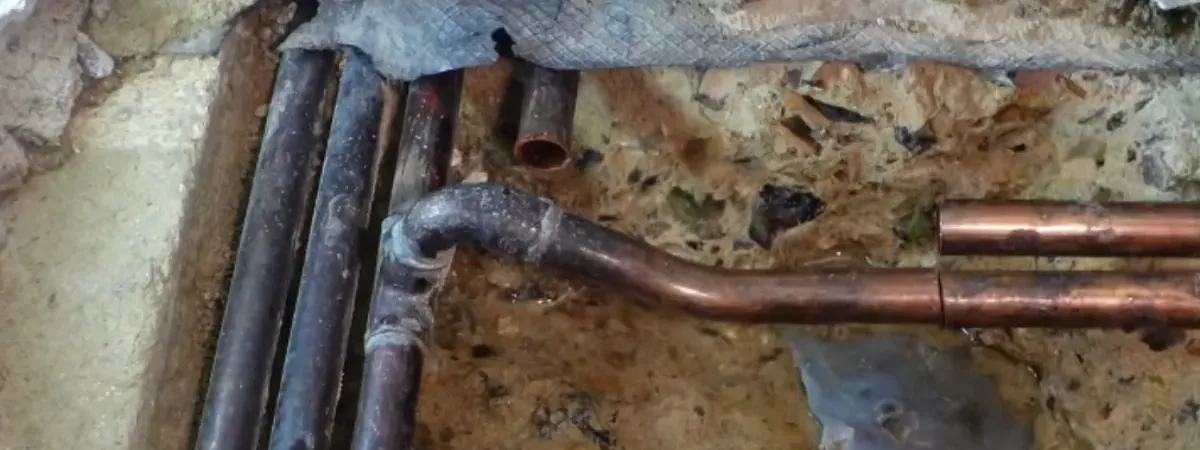
Five signs that point toward the slab
Look and listen with every tap and appliance off. Mark each item that matches.
- A floor spot that feels warm when the heat is off, possibly from a hot line leaking
- The sound of running or hissing water in a quiet house
- A water meter that moves when nobody is using water
- Damp carpet, lifting laminate or a musty smell at floor level
- A bill that jumped without any change in how the household uses water
The two-hour meter test
The EPA's Fix a Leak program describes a simple way to check for a leak between the meter and the house.
- 1
Stop all water use
Turn off taps, the dishwasher, the washer and the ice maker. Make sure no toilet is running.
- 2
Read the meter
Write down the number or take a photo. Some meters also have a small flow dial that spins when water moves.
- 3
Wait two hours without using water
Do not flush or run any tap during this time.
- 4
Read it again
Any change suggests a leak. If the dial moved, the leak is somewhere on the property.
Slab leak or something else?
Many signs have simpler explanations. This table helps rule out the easy ones before you assume the worst.
| What you notice | Could be a slab leak if | Could also be |
|---|---|---|
| Warm floor spot | It stays warm with the heat off and is near a hot line | Sun on a window, a heating duct under the floor |
| Sound of water | You hear it with all fixtures off | A toilet running or a dripping fixture |
| Meter moving | The meter keeps moving after the toilet dye test is clear | A toilet flapper or a leaking outdoor line |
| Damp flooring | It shows up with no spill or roof leak nearby | A plumbing leak in a wall or a drain line |
| High bill | It rose with no household change and the meter is moving | More people living in the home |
Rule out the toilet first
Add a few drops of food coloring to each toilet tank and wait ten minutes without flushing. If color shows up in the bowl, the flapper is leaking and may explain the meter. The EPA notes that a worn flapper can silently waste thousands of gallons a year, so this is worth doing before you call about a slab.
What to do while you wait for help
If the meter is moving and you suspect a leak under the floor, turn off the main supply and see whether the meter stops. If it stops, the leak is on the house side. If it still moves, the leak is between the meter and the shutoff, which is a different repair path.
Move rugs and valuables off damp flooring and take dated photos. Keep the water shut off if flooring is soaking or the sound is loud, and call a plumber who can trace the line. A leak detection visit relies on listening and locating methods first, so cutting into the slab comes last.
Two or more signs showing up?
Call the 24/7 line and describe the warm spot or the meter. A licensed plumber can plan the trace.
Repair paths once the leak is located
After the plumber finds the line, three paths are common. The right one depends on where the leak is, how many problems the line has and what the property owner wants.
| Path | What it involves | Fits when |
|---|---|---|
| Spot repair through the slab | Opening the floor above the leak and fixing that section | One clear leak on an otherwise sound line |
| Reroute | Abandoning the leaking line and running a new one through walls or the attic | The line is hard to reach or keeps failing |
| Repipe | Replacing the water lines throughout the home | Several leaks or a line type that is wearing out |
See slab leak repair and repiping for how each path works.
Why age and renters matter in Bell
Census ACS data shows about 67.6 percent of Bell housing units were built before 1960, with 26 percent from 1939 or earlier. Older homes have had many decades for water lines to wear, be repaired and be rerouted. No one can say which pipe type runs under a particular Bell street from age alone, so the plumber's trace matters more than a guess about the era.
The same data shows about 75 percent of Bell housing is renter occupied. A renter who suspects a slab leak should tell the landlord or property manager right away in writing, and keep photos of any damage. The GSWC report states its distribution system has no lead or galvanized service lines requiring replacement, but that covers the utility side of the meter, not the pipes inside your home.
Source type: Census ACS housing data and Golden State Water Company water quality report
Neighbors, landlords and insurance notes
Residents of Bell Gardens and Cudahy often live in multi-unit buildings where a leak under one floor may affect a neighbor. Tell the property manager so access can be arranged.
Homeowner policies typically respond to sudden accidental damage but not the worn-out pipe itself or a slow leak. Read your policy or ask the insurer before work starts. Renters should tell the landlord and check renter's insurance for their own belongings.
Quick answers
Check that the spot stays warm with the heater off and away from sunny windows. If the meter also moves when all water is off, the odds of a hot line leak go up. A plumber can confirm with locating equipment.
The pipe sits under concrete, and cutting the slab without locating the line first can cause more damage. Shut off the water at the main and call a licensed plumber. Work under a slab falls under the California Plumbing Code, based on the UPC, and permit rules vary, so ask the city building department.
Water saturating the soil under a slab can cause problems over time, but how serious depends on the leak and the soil. A plumber can explain what they find and what to watch.
Policies differ. Many cover sudden accidental water damage but not the worn pipe itself. Read your policy or ask your insurer before work begins.
No. Toilets, faucets and irrigation lines cause most high bills. Do the toilet dye test and the meter test first.
Tell your landlord or property manager in writing, with dated photos. The city of Bell Building and Safety Division enforces plumbing codes, so a landlord who needs permits can ask the city, and tenants should keep copies of every message.