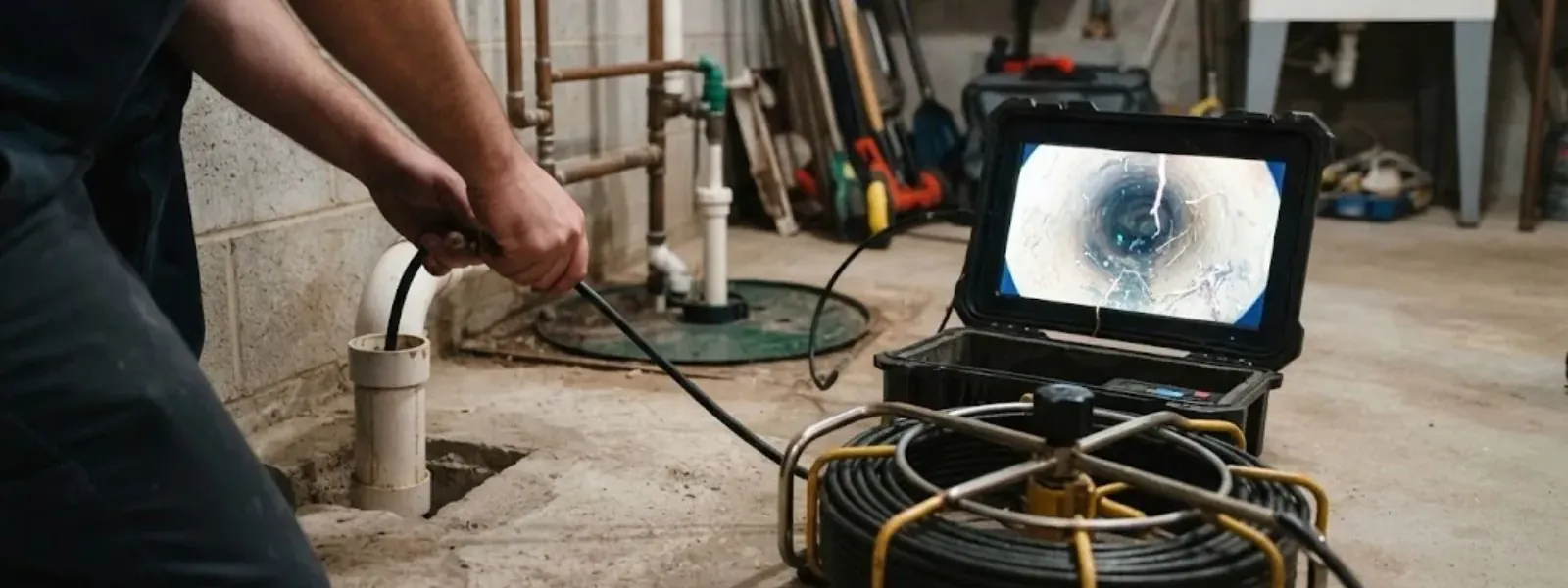
What a useful camera report contains
Reports differ between plumbers and between software packages. These are the items worth asking for before you pay for an inspection.
- The address, date and the point where the camera entered the line
- Video you can replay, not only still photos
- Distance markers so each defect has a position along the pipe
- Labels for cracks, roots, offsets, sags, buildup and breaks
- A note on pipe material and diameter where the plumber could tell
- A plain summary of what was found and what the plumber recommends
How the software ties pictures to pipe
A camera head travels down the line on a push cable. The system records the cable length that has gone out, so each moment of video can be matched to a distance from the entry point. That is how a report can say a root mass sits at a certain length instead of just somewhere down there.
Some systems also track the direction of travel and the slope. This helps the plumber draw a rough path of the line. It is still an estimate, and a locator tool above ground is what confirms where the pipe sits before anyone digs.
What the screen can and cannot tell you
The image is only as good as the pipe is clear. This table separates what a camera shows well from what it can only suggest.
| Question | Camera report answers it | Where it falls short |
|---|---|---|
| Is there a blockage? | Yes, if the camera can reach it | A full blockage may stop the camera short of the real problem |
| Are there roots? | Yes, as a visible mass at a marked distance | It cannot tell how far the roots have spread beyond the camera view |
| Is the pipe cracked or broken? | Often yes, as a visible split or gap | Small hairline cracks can hide under buildup |
| Is the line sagging? | It suggests a low spot where water pools | A flat image does not measure the exact depth of a sag |
| Who owns the damaged section? | No | Ownership comes from the city and property records, not the camera |
| What will the repair cost? | No | Cost depends on depth, access and the repair method chosen |
Pipe ratings and what they mean
Some inspection software lets the plumber score defects by type and severity. These ratings are a way to organize findings, not a legal standard you must meet. Two plumbers can score the same crack differently, so ask what the score means in plain words.
A good report pairs each rating with a recommendation. Clean the line and recheck, spot repair one section, or plan a larger repair. If the report only has numbers and no advice, ask the plumber to explain the next step.
What happens during the visit
The visit follows a predictable path. Knowing it helps you ask better questions.
- 1
Find the access point
The plumber looks for a cleanout, a pulled toilet or another opening where the camera can enter the sewer line.
- 2
Clear what blocks the view
Grease or buildup may need to be cut or flushed first so the lens can see the pipe wall. Hydro jetting is one way to do that when the pipe condition allows it.
- 3
Run the camera and record
The plumber pushes the head along the pipe while the system logs distance and video.
- 4
Mark the surface
A locator tool above ground lets the plumber mark where a defect sits so you can see it relative to the house and yard.
- 5
Review the findings with you
The report shows what the camera found, what it could not see and what the options are. You should leave knowing the next step, even if the next step is nothing.
A clean report is not a promise about the future
A camera only sees the line on the day it travels through it. Roots can regrow and soil can shift later. If you are buying an older house, treat the report as a snapshot of that day and ask about recheck intervals for the line.
Older homes and shared lines in Bell and nearby towns
The Census ACS data shows about 67.6 percent of Bell housing units were built before 1960, with 26 percent from 1939 or earlier. A sewer line from that era may have been patched or partly replaced over time, which is exactly why a camera is useful before a purchase or after repeated clogs.
Maywood adds another wrinkle. The city's state Housing Element draft notes typical lots of 6,000 to 7,500 square feet, often with two or three additional accessory units. Where more than one unit shares a lateral, a camera report helps show which section is carrying the load and where a problem sits, which matters when a landlord and tenants disagree about who pays.
For where a private line ends and the city's responsibility begins, ask Bell Public Works or your city. The camera shows the pipe, not the property boundary.
Source type: Census ACS housing data and state Housing Element draft
Clogs coming back and no one knows why?
A licensed plumber can run a camera and show you the line. The 24/7 line is open.
When a camera is the wrong first move
If a main line is fully backed up and water is rising, the first job is to stop using water and clear the stoppage. A camera can follow once the line is open. Guidance on that is in our sewer line cleaning page.
If the report shows a break or collapse, the next conversation is about repair options. Sewer line repair covers how spot repair and larger replacements compare. Property owners in Maywood and Bell Gardens can ask for the video so they can share it with a landlord, a buyer or an insurer.
Quick answers
Ask before the visit. Many reports include a link or file, and having the video makes it easier to share with a landlord, buyer or insurer.
It can show cracks, gaps and offsets where wastewater may escape. It cannot measure how much water is leaking or confirm where it goes after it leaves the pipe.
A bend, a collapse, a heavy root mass or a cleanout without a straight path can all stop it. The plumber should note where it stopped and why, because the unseen section still matters.
It is a common choice because older lines may have cracks, roots or past repairs that a walk-through cannot reveal. Bring the report to your agent or attorney when you negotiate.
No. It is a plumber's way of sorting findings. Ask the plumber to explain each rating in plain words and tie it to a recommendation.
Ask the city of Maywood and your landlord where responsibility sits. A camera report showing which section is damaged gives everyone the same facts to work from.