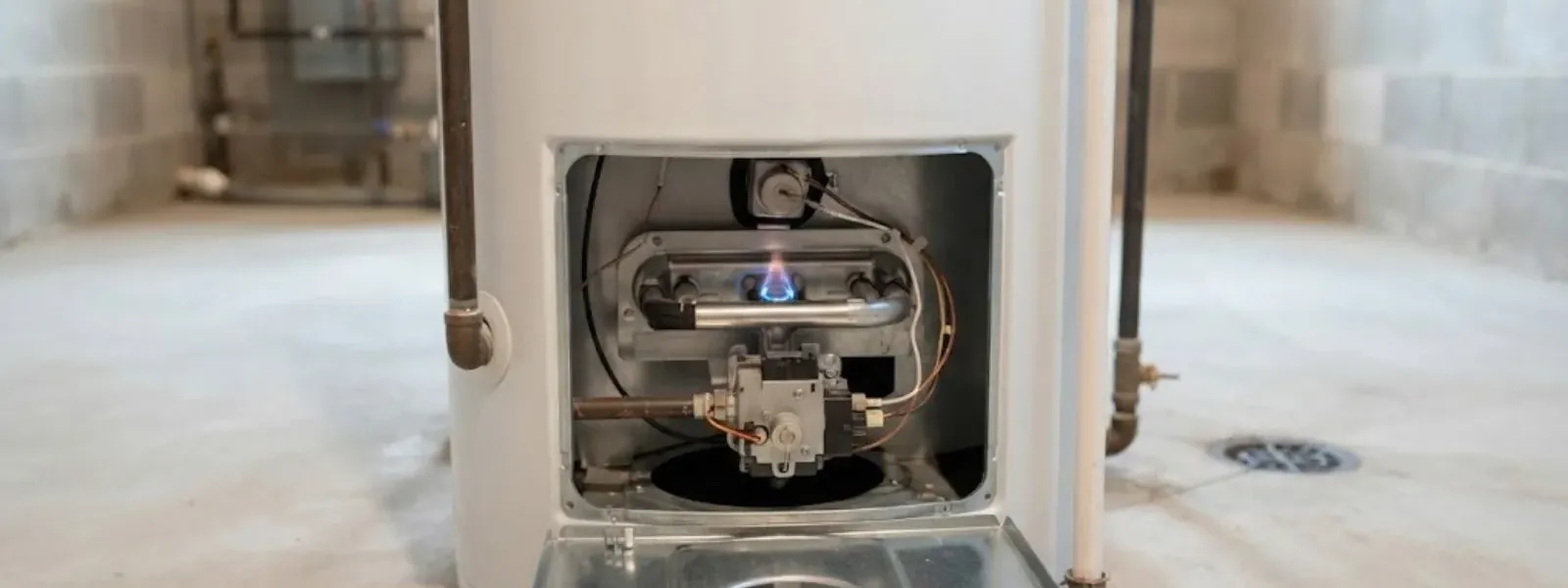
Gas or electric, what to check first
Look at the data plate and the connections. A gas line and a vent mean gas. A thick cable into a junction box means electric.
| Check | Gas heater | Electric heater |
|---|---|---|
| Power source | Gas valve and pilot or igniter | Dedicated breaker and reset button |
| Common cause of no heat | Pilot out or flame sensor failing | Failed element or tripped limit switch |
| Safe homeowner check | Gas control knob position, visible flame color | Breaker, then reset button on the upper panel |
| Sign to stop | Gas odor, soot, scorch marks | Breaker trips again, burning smell |
| Venting | Draft hood or flue must be clear | Not applicable |
| Part that wears | Thermocouple, gas valve, burner | Elements, thermostats |
Safe checks for a gas water heater
First, confirm other gas appliances work. If the stove is dead too, the gas supply is the issue and you should call the gas utility. If only the heater is out, look at the control. Many have a window where you can see a small blue pilot flame.
If the pilot is out, follow the lighting instructions printed on the unit exactly. A pilot that goes out again within minutes usually means a worn flame sensor or a draft problem. Do not keep relighting it, since repeated attempts hide the real fault.
Signs to leave it alone
Yellow or lazy flames, black soot around the draft hood, a rusty or scorched tank base or a rumbling burner are warnings. So is a heater in a closet with no clear air supply. Turn the gas control to off and call a plumber.
Safe checks for an electric water heater
Start at the breaker panel. A double breaker for the heater may have tripped, and one reset is reasonable. If it trips again, leave it off, because something is shorted.
Next, find the red reset button behind the upper access panel. Power must be off at the breaker before you remove the panel. A tripped limit switch can be reset once, but it often tripped because of a failing thermostat or a scaled element. See the separate walk-through on elements if the tank still will not heat.
A short troubleshooting routine
Work through these in order and stop when the problem is found or when a step feels unsafe.
- 1
Check for water
Look at the floor around the tank and at the relief valve pipe. Any dripping from the tank body means the tank is failing.
- 2
Check the fuel
Test the stove for gas, or the breaker for electric. No fuel means no heat, and the fix may be outside the heater.
- 3
Check the setting
Confirm the thermostat or gas knob has not been bumped to a low setting. Do not set it to the hottest level.
- 4
Check for a clear vent
On gas, the area around the flue must be open and clean. A blocked vent is a fire and carbon monoxide hazard.
- 5
Note what you see
Write down noises, error lights, pilot behavior and when the problem started. That gives the plumber a head start.
Bell households put heavy demand on one heater
The 2020 Census counted 3.49 persons per household in Bell, and about 75% of housing units were renter-occupied in the ACS data. More people sharing one tank means the lower element or burner works hard every day, and a weak heater is noticed immediately.
If you rent, report no hot water to your landlord in writing right away. Many tenants cannot touch the gas connection or the wiring, and a repair done without approval can create a dispute. Keep a dated record of when the outage started.
Source type: US Census data
Heater still cold after the checks?
Call (855) 575-2890 with what you found. The line is open 24/7.
What not to do
Do not bypass a safety control, jam a reset button or block a vent. Do not drain a tank without turning the fuel off first. These shortcuts have injured people, and they can void warranty coverage.
What a diagnostic visit covers
The plumber starts with the same questions you just answered, then tests the parts directly. On gas, that means checking the flame sensor, the gas valve and the venting. On electric, it means testing both elements and both thermostats with a meter.
The visit includes a clear price before work starts, so you can decide on a part swap or a new heater with the facts in front of you. Ask what was tested and what was found. A good explanation names the failed part and why it failed, not just the repair.
Repair or replace
A plumber weighs the cost of the repair against the condition of the tank. A leaking tank cannot be repaired, and rust at the base is a bad sign. A failed element or a bad thermostat is usually worth fixing if the tank is sound.
Check the manufacturer date on the data plate and the warranty paperwork before deciding. When the tank is failing, water heater replacement is the better path, and water heater repair covers the parts that can be swapped.
Nearby service
Water heater trouble does not stop at the city line. The same checks apply for readers in Bell Gardens and Maywood, and the emergency line covers both.
Quick answers
Common causes are a worn flame sensor, a dirty pilot orifice or a draft that blows the flame out. A plumber can test the sensor and the gas valve.
Leave the building at once. Call 911 and the gas utility from outside, and do not use switches or phones inside.
One reset is reasonable. If the breaker trips again, leave it off, because the heater or its wiring has a fault.
Many heaters have instructions on the unit, and a careful owner can follow them if there is no gas odor. If it will not stay lit, stop and call.
That depends on your lease and California tenant rules, which we cannot interpret. Notify the landlord in writing and keep records.
Permit rules vary, so ask the Bell Building and Safety Division at City Hall, (323) 588-6211. Replacing the heater is different from swapping a small part. Water heater work falls under the California Plumbing Code, which is adopted statewide and based on the UPC.