Start with how each tool works
A snake, also called a cable or auger, is a coiled steel line with a head on the end. The plumber feeds it into the drain and turns it to bore through or hook onto the blockage. It opens a channel, then is pulled out.
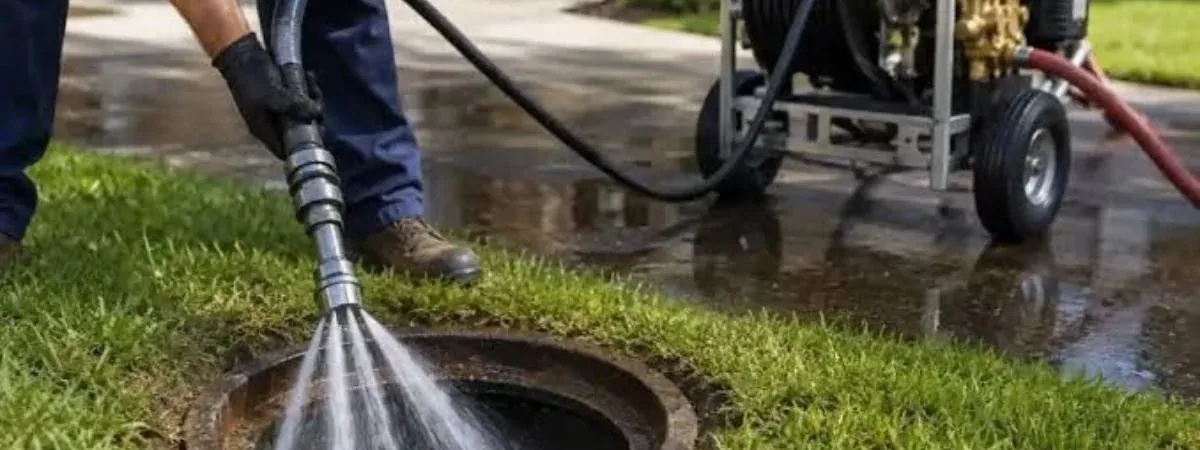
A hydro jetter sends water through a hose with a nozzle that fires jets forward and backward. The water cuts through the clog and scrubs the walls, carrying debris down the line. Both tools are standard in drain work, and neither is better in all cases.
What to do before you try a drain tool
Before you reach for a snake or call about jetting, a few checks keep a small clog from becoming a bigger mess.
- Check whether one drain or several are slow, because several points to the main line
- Do not pour chemical cleaners into a drain you plan to snake or jet
- Never run a rented pressure hose into a drain, since high pressure can damage weak pipe
- Wear gloves and eye protection if you open a trap, and expect dirty water
- Stop using water at the affected fixtures and move items off the floor nearby
- Tell your landlord in writing and keep dated photos if you rent
Side by side comparison
This table covers the points that usually decide between the two tools.
| Question | Snaking | Hydro jetting |
|---|---|---|
| What it does | Opens a path through the clog | Clears the clog and scrubs the pipe wall |
| Best for | A single fixture, a fresh soft clog, a foreign object | Grease, scale, heavy buildup, roots in a sound pipe |
| Leaves behind | Some residue on the walls, which can clog again | A cleaner wall in the section it reached |
| Pipe condition needed | Tolerates more wear | Needs a sound pipe, camera check advised |
| Setup | Light and quick | Larger equipment and a good access point |
| Typical sign it is wrong | The clog returns within weeks | Water escapes at a crack or joint |
When a snake is the right call
If one sink, tub or toilet is slow and the others drain normally, the clog is in that branch. A snake can reach it and restore flow. Hair in a shower trap, a soft paper clog and a small object are classic snake jobs.
The main limit shows up when the same drain stops again. A cable can leave a ring of grease or scale behind. Repeated visits for the same fixture are a signal to look inside the pipe, which our drain cleaning page describes in more detail.
When jetting earns its place
Grease that has hardened on a kitchen line and scale that narrows a pipe do not break up well under a cable. High pressure water can cut and flush them. Root growth inside a sound pipe is another job where jetting can clear what a cable would only poke through.
On a main line that backs up several fixtures at once, the case for jetting grows because the problem usually sits along many feet of pipe, not at one spot. Hydro jetting is also what a plumber might choose to clean a line enough for a camera to see the wall.
Why the camera comes first
High pressure water in a cracked, collapsed or badly aged pipe can make the damage worse and push water into the soil. A drain camera shows whether the pipe can take the pressure. It also tells the plumber where the blockage is, which saves guessing. Our sewer camera inspection page explains what the footage can and cannot show.
How to decide, step by step
These questions point toward the right tool before anyone starts work.
- 1
How many fixtures are affected?
One slow drain points to a snake. Several fixtures backing up together points to the main line.
- 2
Has it happened before?
A first-time clog is often a snake job. A repeat clog suggests buildup that needs a closer look.
- 3
What goes down that line?
Kitchen lines carry grease. Bathroom lines carry hair and soap. Laundry lines carry lint. The source shapes the tool.
- 4
Can the pipe take pressure?
Ask for a camera view before high pressure water goes in, especially in older homes.
- 5
What does the plumber recommend and why?
A clear explanation matters. If the recommendation does not match what the camera or symptoms show, ask again.
Not sure which tool your drain needs?
The 24/7 line is open. A licensed plumber can talk through the symptoms with you.
Why older Bell lines make the camera step matter
The Census ACS data shows about 67.6 percent of Bell housing units were built before 1960. In Maywood, the state Housing Element draft puts 65.8 percent of units before 1959 and describes lots often carrying two or three additional accessory units. Lines of that age and use may have been patched, shared or stressed, so checking the pipe before using pressure is a practical precaution.
Cudahy is another dense town, with 27.3 percent of units in buildings of five or more. When many households feed a single line, grease and wipes add up fast. Ask the plumber to explain what the camera showed, not only which tool was used.
Source type: Census ACS housing data and state Housing Element drafts
What not to put down any drain
Prevention keeps either tool from being needed. These items cause most repeat clogs.
- Cooking grease, oil and fat poured warm into a sink
- Wipes of any kind, including ones sold as flushable
- Coffee grounds and eggshells in a kitchen sink
- Hair clumps without a catch in the shower
- Paper towels and feminine products in a toilet
- Harsh chemical drain openers, which can damage pipes and make later work unsafe
Landlords, tenants and shared lines
Bell is about 75 percent renter occupied. A renter whose drain keeps stopping should tell the landlord in writing, since a repeat clog in a building line may not be the tenant's to pay for. The same issue comes up in Maywood and Cudahy, wherever several units share a pipe.
Keep records of each clog, the date and what was done. They help show a pattern if a landlord needs to approve a larger fix.
Quick answers
Not always. Cracked, collapsed or fragile lines can be damaged by high pressure. A camera check first lets the plumber decide if jetting is safe for that pipe.
Rarely when used correctly, but a rough cable in a worn pipe can scratch or catch. A plumber chooses the head and cable size for the pipe.
In a sound pipe, jetting can clear roots along the wall, while a cutting head on a cable can open a path. A camera shows how bad the roots are and whether the pipe is cracked.
A snake opens a hole but may leave buildup on the walls. The clog can return as that buildup grows. A camera or jetting can address the cause.
They may harm pipes and are unsafe for a plumber to work around. Skip them if you plan to call for service.
Responsibility depends on the lease and the situation. Report each clog in writing and keep the plumber's notes. For rules on permits for larger work, ask the Bell Building and Safety Division.