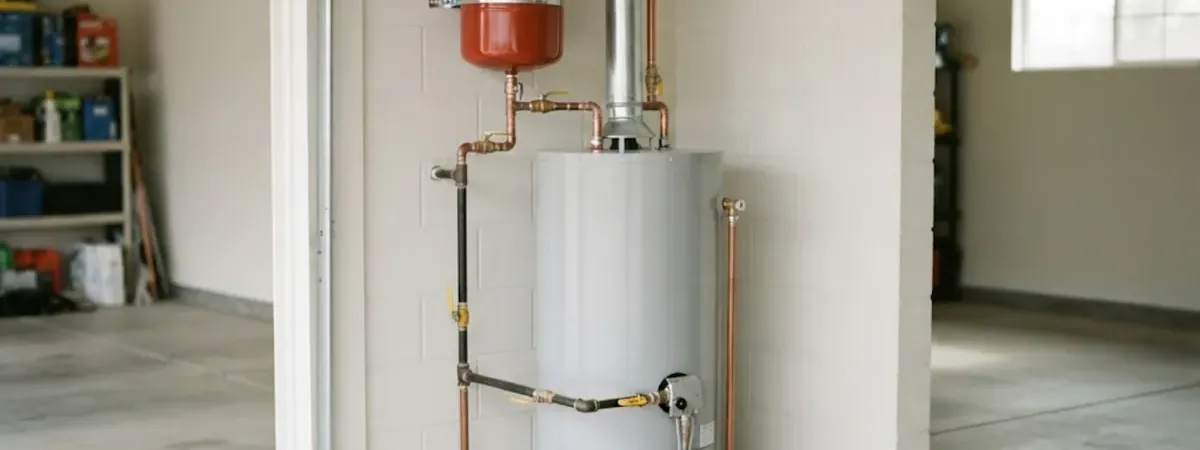
Find out how old your heater really is
Age matters, but only if you know it. Here is how to pin it down.
- 1
Find the data plate
It is a label on the side of the tank. It lists the model, serial number, capacity and fuel type.
- 2
Read the date or serial code
Many makers hide the date inside the serial number. The manufacturer's website or phone line can explain their code.
- 3
Dig out the warranty papers
The warranty shows what the maker covers and for how long. Landlords and previous owners often keep this paperwork.
- 4
Check installation records
A permit record or an old invoice can confirm when the heater went in, which helps if the plate is unreadable.
Warning signs and what they usually mean
A single sign does not always mean replacement. This table sorts common symptoms by likely cause and next step.
| Sign | Likely meaning | Repair or replace? |
|---|---|---|
| Water pooling at the base of the tank | The tank body may be leaking | Usually replace, after checking fittings |
| Rust colored hot water | Corrosion in the tank or the pipes | Have a plumber inspect |
| Rumbling or popping | Sediment on the tank bottom | Flush and inspect, then decide |
| Not enough hot water | Failed element, thermostat or sediment | Often repairable |
| Hot water that runs out fast | Sediment or undersized tank | Flush, then reconsider sizing |
| Leak from a pipe fitting or valve | A part has failed, not the tank | Often repairable |
Why a lifespan figure can mislead
A rule of thumb sounds helpful until your water, usage and maintenance differ from the average. A heater serving a large household works harder than one serving a single person. A tank in a garage faces different conditions than one in a closet.
What the data plate date gives you is a starting point to compare against the warranty. If the unit is near or past the warranty term and starting to show signs, plan ahead instead of waiting for a leak.
A warranty is not the same as a prediction. It tells you what the maker will cover, not how long your unit will run in your home. Keep the paperwork in a folder you can find, because a claim usually needs the model and serial number from the data plate.
Safety steps before you inspect an older heater
A quick look at an aging heater is fine, but a few cautions apply before you check anything.
- If you smell gas, leave the building and call 911 and the gas utility from outside
- Stay off the tank top and do not climb on it to read the data plate
- Do not touch the temperature and pressure relief valve or its pipe, since discharge can be scalding
- Look for rust, moisture or scorch marks around the base, but do not remove covers on a gas or electric unit
- Photograph the data plate and the manufacturer date for your records
- Turn off the cold supply valve if you find an active leak, then call a licensed plumber
What Bell's water does to a tank
The Golden State Water Company Bell-Bell Gardens report lists average hardness of 210 mg/L, about 12 grains per gallon, which the USGS scale calls very hard. Hard water drops scale inside a heated tank, which can build sediment, strain heating parts and change how fast the anode rod wears. If your address is on that system, treat maintenance as part of the plan, not an extra.
Households in Cudahy and Maywood should ask their water company for a hardness figure, since none is verified here for those systems.
Source type: Golden State Water Company 2026 Annual Water Quality Report
The anode rod and why it matters
Inside most tanks is a rod that corrodes first so the tank steel does not. Once it is used up, corrosion can reach the tank wall. A plumber can inspect the rod during service. Checking it is one of the more practical ways to extend a heater's useful life.
Heater near the end of its warranty?
Call the 24/7 line and a licensed plumber can look at the age, the signs and the options.
Repair or replace, a simple way to decide
Use these points together. No one factor settles it.
| Factor | Leans toward repair | Leans toward replacement |
|---|---|---|
| Where the leak is | A fitting, valve or pipe connection | The tank body |
| Age compared with warranty | Within or near warranty | Well past warranty and showing signs |
| Frequency of problems | A first issue | Repeated repairs in a short span |
| Energy goals | Satisfied with current use | Interested in a more efficient type |
| Household need | Hot water meets demand | Runs out or demand has grown |
If you do replace, think about type and size
A replacement is a chance to rethink the type. The Energy.gov guide says heat pump water heaters are two to three times more efficient than conventional electric resistance models. They need at least 1,000 cubic feet of air space and ambient temperatures between 40 and 90 degrees Fahrenheit all year, so a cold or tight closet is a poor fit.
For tank models, Energy.gov says to match the first hour rating to your peak hour demand. That rating is the number of gallons the heater can supply in an hour. See our water heater replacement page for how the decision plays out.
Habits that help a heater last
None of these is a promise of extra time. They simply remove common causes of early trouble.
- Look at the base of the tank every month for dampness or rust streaks
- Test the temperature and pressure relief valve as the manual directs
- Flush sediment on the schedule the manufacturer gives
- Have the anode rod inspected during service
- Keep storage and clutter away from the heater and its vent
- If you ever smell gas, leave the building and call 911 and the gas utility from outside
Rentals, permits and planning ahead
Bell is about 75 percent renter occupied and the owner-occupied rate is 26.5 percent. A tenant who sees leak signs should tell the landlord in writing rather than wait. A landlord who replaces a heater should ask the Bell Building and Safety Division about permits, since permit rules vary by city.
Planned work is easier than an emergency swap. For bigger changes like a new fuel type or location, water heater installation covers venting, gas lines and bracing. Residents of Bell Gardens can use the same checklist. A replacement falls under the California Plumbing Code, which is based on the UPC.
Quick answers
No honest single figure applies to every unit. Check the data plate date, the warranty term and the signs of wear on your unit.
Regular flushing, checking the anode rod and fixing small leaks early all help. Follow the manual, since details differ by model.
If the unit is past its warranty and shows signs, planning ahead beats an emergency swap. A failed tank can flood a floor.
It builds scale and sediment that stress parts. In very hard water areas, maintenance matters more. Ask your water company for its hardness figure.
For a tank, pick a first hour rating at least equal to your peak hour demand. For tankless, add the flow rates of devices you will run together.
Tell the landlord or property manager right away, in writing, with photos. Shut off the cold supply and the power or gas to the heater if it is safe to reach them.