Find the leak in four moves
These steps follow the EPA WaterSense Fix a Leak guidance and need only a clock and some food coloring.
- 1
Compare to your normal
Look at the last few bills. If usage rose with no change in who lives there, keep going. If a relative moved in, the rise may be real use.
- 2
Run the meter check
Turn off every tap and appliance, read the meter, wait two hours with no water use and read it again. Any change suggests a leak.
- 3
Do the toilet dye test
Drop food coloring in each tank and wait ten minutes without flushing. Color in the bowl means a leaking flapper or fill valve.
- 4
Look for the obvious drips
Check faucets, under sinks, the water heater, hose bibs and any irrigation. Make a note of any damp patch in a yard near the meter.
Where the missing water usually goes
Most high bills trace back to a short list of sources. This table shows each one, how it shows itself and who fixes it.
| Source | How it shows up | Who handles it |
|---|---|---|
| Toilet flapper or fill valve | Dye appears in the bowl, tank refills by itself | Homeowner or plumber, see toilet repair |
| Dripping faucet or shower valve | Steady drip, wet cabinet floor | Plumber, see faucet repair |
| Irrigation line or sprinkler | Soggy patch, greener grass, hissing | Property owner or irrigation contractor |
| Water heater relief valve or fitting | Dampness, crust, or water by the base | Plumber |
| Underground line or slab | Meter moves, no visible water | Plumber locates, owner or landlord repairs |
| Meter side of the line | Meter moves even with the main closed | Water company |
Use the shutoff to split the problem in two
Close the main valve to the house and watch the meter. If the dial stops, the leak is inside the home. If it keeps moving with the main closed, the leak sits between the meter and your shutoff, so tell the water company and a plumber.
Bigger households are not always leaks
Census numbers show Bell averages 3.49 persons per household, and the figure in nearby Cudahy is 3.80. More people means more showers, loads of laundry and toilet flushes. A bill that rises after a new baby or a visiting relative may be an honest reflection of use.
The EPA 12,000 gallon mark is for a family of four in winter, when outdoor use is low. If your household is larger, scale that expectation up and use the meter test as the final judge, since it ignores how many people live there.
Who handles what in Bell
Your water bill names the company that serves your address. The Golden State Water Company Bell-Bell Gardens system lists Bell, and Tract 180 Mutual Water Company at 4544 Florence Ave is also a provider in the area. Golden State Water can be reached at 1-800-999-4033, which is useful when the meter keeps moving with your main closed.
Because several providers overlap in the region, a neighbor's advice about who to call may not apply to you. Check your own bill before you phone anyone, so the question about the meter goes to the right office.
Source type: City and water company service listings
Tests say there is a leak but you cannot see it?
The 24/7 line connects you with a licensed plumber who can trace it.
Leaks that do not show on the floor
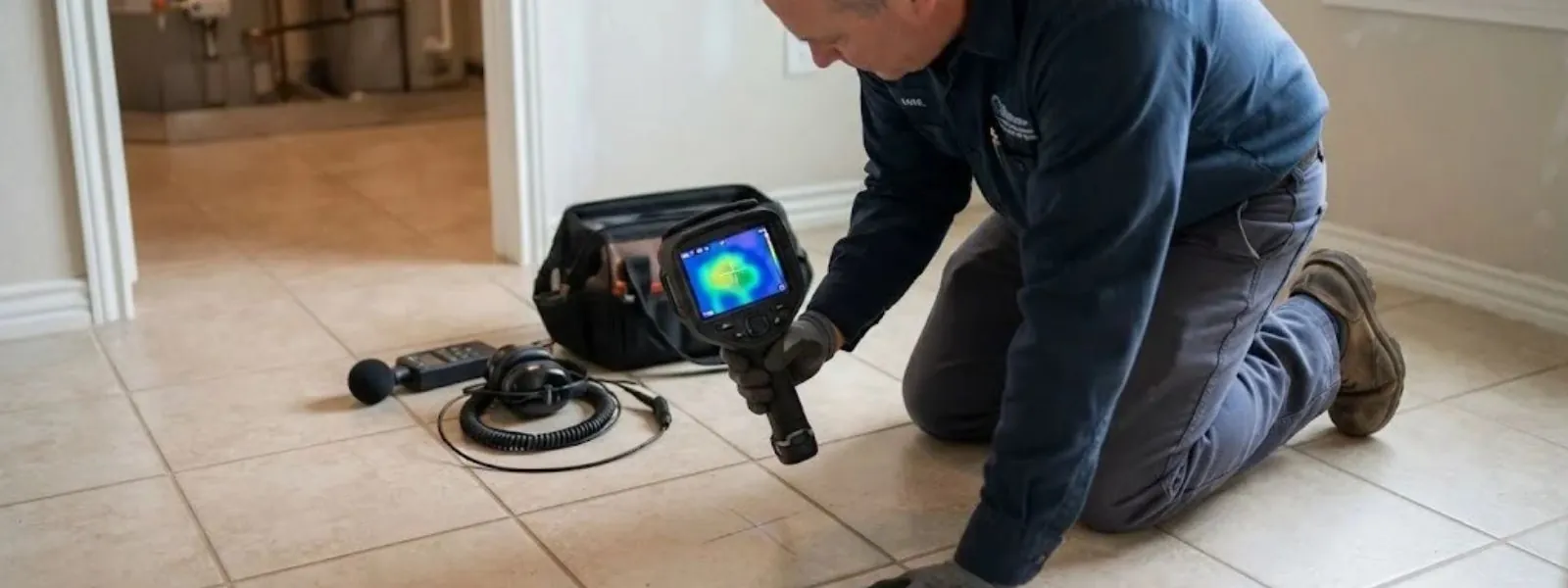
Some of the costliest leaks never leave a puddle. Water can seep into soil beneath a slab or from a buried line. The meter keeps moving, the bill keeps rising and nothing looks wrong at the surface.
Pinpointing the spot is a job for listening and heat-sensing equipment. Our page on leak detection explains how the visit works. The same tracing work is done for homes in Cudahy and Maywood, where dense housing and shared lines can make the source harder to spot.
What renters should do with a high bill
Many Bell households rent, so the first call is often to the landlord, not a plumber.
- Tell the landlord or property manager in writing and attach the meter reading
- Take dated photos of any damp spots, stains or dripping fixtures
- Ask who pays the water bill, since in many rentals it is included in rent
- Do not hire a plumber to open walls without the landlord's approval
- Keep a copy of every message and the bills for later disputes
- Check renter's insurance for personal property if water has reached your belongings
Reading the meter without guessing
Meters usually sit in a box near the curb or the property line. Lift the lid carefully and watch for insects or debris. The register shows a number that climbs as water passes, and many meters also have a small triangle or wheel that spins with even a slow flow.
If you cannot find the box or the lid is stuck, ask your water company rather than prying it open. Take a clear photo of the reading each time so you are comparing the same digits. A photo with a time stamp also helps if you later need to explain the test to a landlord or the company.
Fixing it and getting the next bill checked
Once a leak is repaired, wait for the next billing cycle and compare use to your normal. If the number has not come down, the first leak may not have been the only one. Run the meter check again after the repair.
Insurance may respond to sudden accidental damage but typically not to a worn part or a slow leak. Read your policy or ask the insurer before work starts. A plumber's written invoice and the meter readings are the documents most useful to a claim.
Quick answers
The EPA says a worn flapper can silently leak thousands of gallons a year. The dye test shows it in ten minutes.
Call the water company named on your bill and ask about the process. Bring your meter readings and any repair invoice.
The leak is likely on the utility side of the shutoff or the shutoff itself is not closing fully. Tell the water company and ask for the meter to be checked.
A quick check every month or two is a simple habit. Write the reading down so you can spot changes.
No. More people, more laundry or a hot spell can raise use. The two hour meter test and the dye test separate real leaks from normal use.
Look at the bill itself. Golden State Water Company or Tract 180 Mutual Water Company will be named, and each has its own contact for meter and billing questions. According to the Golden State Water 2026 water quality report, its Bell-Bell Gardens system lists Bell and Bell Gardens, but your bill shows which company serves you.