Where Bell's water falls on the hardness scale
The USGS groups hardness as calcium carbonate in milligrams per liter. The GSWC report for the Bell-Bell Gardens system gives a range and an average.
| USGS class | Hardness (mg/L) | Where GSWC Bell-Bell Gardens sits |
|---|---|---|
| Soft | 0 to 60 | Below the reported range |
| Moderately hard | 61 to 120 | Below the reported range |
| Hard | 121 to 180 | Low end of the range starts here |
| Very hard | Over 180 | Average of 210 mg/L, with a range of 137 to 280 |
Source is the GSWC 2026 Annual Water Quality Report covering calendar 2025. It applies to addresses served by that system only.
What scale does inside a tank heater
Calcium and magnesium dissolve easily in cold water. When the water heats, they come out of solution and settle as a hard crust. In a tank heater, that crust and loose sediment collect at the bottom, where the burner or lower element does its work.
Sediment acts like a blanket between the heat source and the water. The heater has to run harder to reach the same temperature, and you may hear popping or rumbling as steam bubbles push through the layer. Those sounds are a hint that the tank needs attention.
The parts hard water hits first
Not every symptom means the tank is finished. These are the usual trouble spots.
Heating elements in electric tanks
Scale coats the metal and traps heat, so the element runs hotter than it should. It can burn out sooner. See water heater repair for what a plumber checks.
Gas burner area
Sediment at the bottom of a gas tank sits where the flame heats the steel. Noise and slow heating are the common signs.
The anode rod
This rod sits in the tank and corrodes in place of the tank steel. Hard water chemistry can change how fast it wears, so it is worth inspecting during service.
The relief valve and fittings
Mineral buildup can stick a relief valve or leave crust around a fitting. Check for dampness and crust on the top of the heater.
A basic flush, in the order a plumber would do it
Follow your heater's manual first, because details differ by model. This is the general sequence.
- 1
Turn off the power or gas
For electric, switch off the breaker. For gas, set the control to the pilot or off position as the manual directs.
- 2
Close the cold water supply
This keeps the tank from refilling while you drain it.
- 3
Connect a hose and open a hot tap
Run the hose to a safe drain. Opening a hot tap upstairs lets air in so the tank empties.
- 4
Open the drain valve and watch the water
Gritty or cloudy water points to sediment. If it will not flow, the valve may be clogged with scale, and forcing it can damage it.
- 5
Close, refill and restore power
Close the drain, open the cold supply, let the tank fill with a hot tap open until water runs steady, then switch the power or gas back on.
Hot water and a clogged drain valve
If the drain valve will not open or leaks after you try it, stop and call a plumber. Forcing a scaled valve is a common way to create a leak where there was none. The water inside the tank is also hot enough to cause burns, so keep hoses and people clear.
What a softener can and cannot do
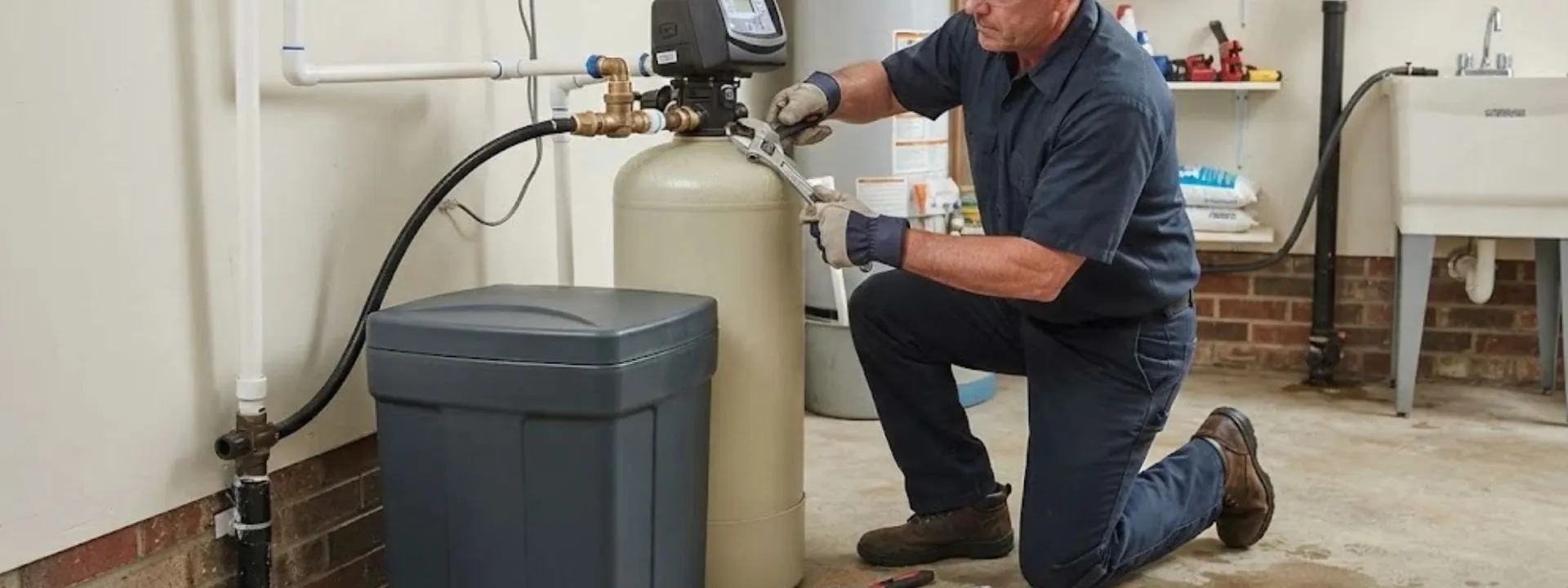
A water softener removes the calcium and magnesium that cause scale. It will not clean scale that is already in the tank, and it does not filter other things from the water. The two jobs are different, as our page on water softener and filtration explains.
Softeners also need salt, space and maintenance, and renters usually cannot add one without the landlord's approval. For many households, a regular flush and a check of the anode rod is the more realistic plan.
Heater rumbling like popcorn?
A licensed plumber can look at the tank. The 24/7 line is open.
Which water do you actually have?
The hardness numbers above apply to addresses on the Golden State Water Bell-Bell Gardens system. The GSWC report describes a blend of treated groundwater from the Central Groundwater Basin and imported water from the Colorado River Aqueduct and State Water Project. If your bill comes from GSWC, treat very hard water as the working assumption when you plan heater maintenance.
Tract 180 Mutual Water Company is also listed as a provider in the area, and the bill tells you which company serves you. Cudahy lists three providers and Maywood is served by mutual water companies, so for Cudahy and Maywood homes the answer is to ask your water company for its hardness figure. No verified number exists in this guide for those systems.
Source type: Golden State Water Company 2026 Annual Water Quality Report and city utility listings
Deciding between flush, repair and replacement
A heater that makes noise but still heats well often needs a flush and inspection. One that leaks from the tank body, as opposed to a fitting or valve, is usually past repair. Our water heater replacement page covers that decision. Energy.gov water heating guidance from the Department of Energy is a neutral reference to read before you spend on treatment or a new heater.
Check the manufacturer date on the data plate and the warranty paperwork before spending money. Do not rely on an age guess, because hard water use history varies from home to home. Households near Bell Gardens should confirm which of the city's two water systems feeds their street, since the GSWC hardness figure covers only one part.
Quick answers
For addresses on the GSWC Bell-Bell Gardens system, the average is 210 mg/L, which the USGS scale calls very hard. The range in the report is 137 to 280 mg/L.
Follow the manufacturer's manual. Very hard water tends to build sediment faster, so the manual interval is a minimum, not a target.
It reduces new scale but does not remove what is already inside the tank. A flush and a plumber's inspection still matter.
Indirectly. Scale can seize valves and strain parts, and tank corrosion can follow. A leak from the tank body means replacement, while a leak from a fitting may be repairable.
No, but popping or rumbling suggests sediment. The tank data plate tells you the fuel type and capacity.
Not necessarily. Cudahy lists three water providers and the city page does not say which serves which address. Your water bill shows your provider, and the provider can give you its hardness figure.